Chenille & Varsity Jacket Patches: The Ultimate Digitizing & Production Guide
Vintage chenille patches dominate varsity jackets and streetwear. Learn how loop moss stitches work, chainstitch borders, and the secrets to digitizing custom chenille emblems.

Embroidery Digitizing Studio
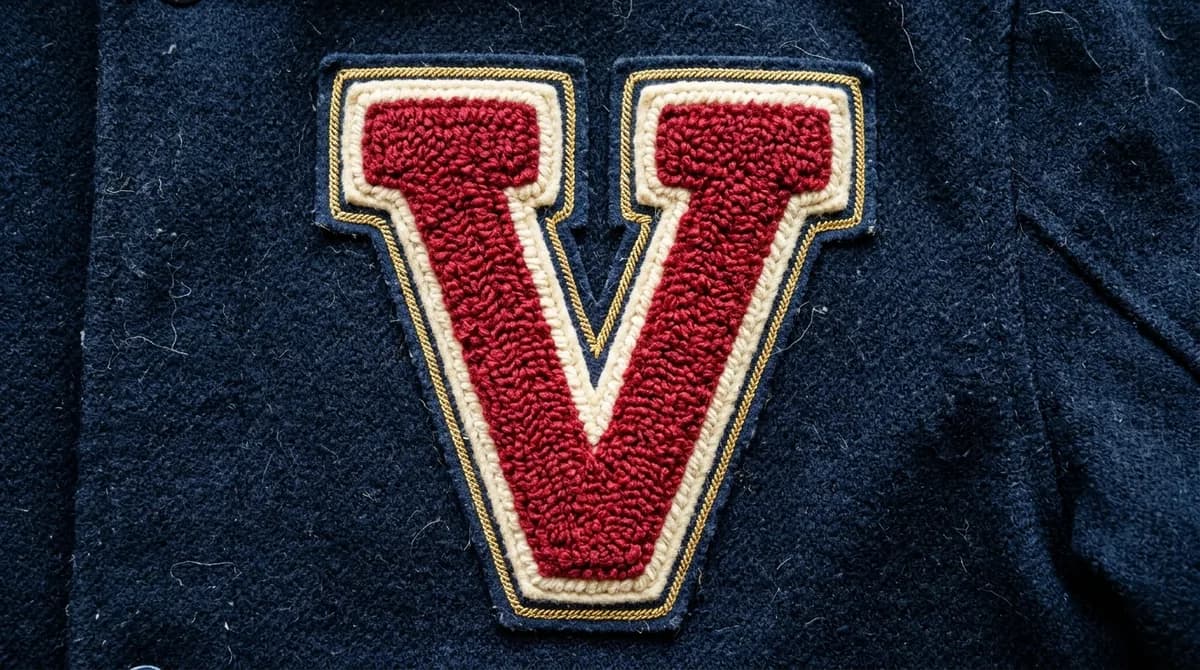
From collegiate letterman jackets to luxury streetwear fashion labels, chenille patches represent one of the most recognizable, tactile, and high-margin embroidery disciplines in the world. The rich, velvety carpet-like loops and bold chainstitched outlines turn ordinary athletic emblems into heirloom apparel pieces.
Yet despite massive demand, chenille remains one of the least understood techniques in the digitizing world. Designing for loop yarn requires fundamentally different mechanics than standard lockstitch satin files. In this master guide, we explore the science, machine mechanics, and digitizing rules behind custom varsity chenille patches.
The Anatomy of a Varsity Chenille Patch
Unlike standard embroidered, woven, or PVC patches, a traditional varsity letterman patch is constructed from three distinct structural layers:
- 1The Felt Foundation: A rigid, dense wool or acrylic felt base (typically 20oz to 24oz athletic felt) that absorbs loop tension without puckering or curling.
- 2The Moss Stitch (Loop Fill): Thick acrylic or wool blend yarn pushed up through the felt to form a dense canopy of uniform loops (resembling a plush carpet).
- 3The Chainstitch Frame: A classic interlocking chainstitch border that locks down the outer edges of the loops, prevents fraying, and defines sharp serif corners.
- 4Optional Contrasting Secondary Felt: A secondary felt color cut 3mm-6mm larger than the top layer to create the iconic collegiate drop-shadow effect.
How Chenille Digitizing Works
In specialized digitizing suites like Wilcom or Pulse with chenille modules, digitizers program two unique stitch types:
- Moss Stitch (Loop Fill): Programmed with spiral or contour stitch directions. The needle height determines the loop loft (typically 2.0mm to 3.5mm height). The looper beneath catches the yarn and holds the loop upright as the needle retracts.
- Chainstitch (Border & Detail): Programmed around all outer perimeters and interior cutout apertures. The chain acts as an anchor fence that traps loop strands in place.
- Color Sequence Sequencing: Chainstitch must always sew either simultaneously with moss transitions or directly after loop sections to lock yarn tails securely.
Faux-Chenille on Standard Embroidery Machines
What if your shop only has standard lockstitch embroidery machines? You can still achieve a remarkable retro chenille look for clients using Faux-Chenille Digitizing:
- Dual-Felt Appliqué Technique: Use thick wool felt as the base letter, digitized with clean appliqué tackdown and satin border stitches.
- Long-Looped Tatami Underlay: Program a loose Tatami underlay with open angles, followed by thick textured matte thread (such as cotton or matte polyester thread) to mimic collegiate wool texture.
- 3D Foam Relief: Use 3D puff digitizing techniques over felt to provide high physical dimension without specialized chenille loopers.
Backing & Attachment: How to Finish Chenille Emblems
Because varsity jackets are heavy outerwear items (often leather sleeves with melton wool bodies), chenille patches are rarely ironed on with standard adhesive. For complete durability, finish patches with:
- Heat-Seal Backing: Applied temporarily to hold the patch in place on the jacket chest or sleeve prior to sewing.
- Zig-Zag or Straight Border Stitching: Sew directly around the secondary felt rim using clear nylon mono-filament or matching spun polyester thread.
- Hook & Loop (Velcro): Popular for modern tactical and streetwear collections requiring interchangeable varsity letters.
Order Custom Patch Digitizing with Velora
Whether you need authentic chenille patch files, multi-layered collegiate felt vector patterns, or large jacket back embroidery digitizing, precision stitch geometry is critical.
At Velora Digitizing, we provide complete custom patch digitizing, color-separated production sheets, and vector files ready for commercial embroidery machines with guaranteed satisfaction.
Written by the Velora Digitizing Team
Digitizing StudioThis guide is written and reviewed by the digitizers at Velora Digitizing, who prepare embroidery files for caps, jackets, patches, and left chest logos every day. The advice here comes from the same stitch-path, underlay, and fabric choices we make on client orders.
Related service
Custom Patch Digitizing Services