Jacket Back Embroidery Size and Stitch Count: Size Chart, Hoops and Digitizing
Jacket backs are the biggest embroidery jobs most shops run. Here is the standard size, how stitch count scales with coverage, which hoop to use and how to keep the panel flat.
Embroidery Digitizing Studio
Commercial Digitizing Service
Need production-ready machine files? Explore our Embroidery Digitizing Services
Jacket back embroidery size for adult jackets is usually 10 to 12 inches wide (255 to 305 mm), placed about 6 to 8 inches below the collar seam. Stitch count depends on how much of that area is filled: open designs and lettering run 15,000 to 40,000 stitches, while solid-fill badges can pass 80,000. Use a large jacket frame, heavy cutaway backing and a file sequenced from the center outward to keep the back panel flat.
Below are a size chart by jacket type, stitch count estimates by coverage, hoop options, placement and the digitizing and stabilizer settings that stop large designs from pulling.
Jacket Back Embroidery Size Chart
| Jacket | Design width | Max height | Top of design below collar |
|---|---|---|---|
| Adult L to 2XL | 11 to 12 in (280 to 305 mm) | 12 to 14 in | 6 to 8 in |
| Adult S to M | 10 to 11 in (255 to 280 mm) | 11 to 12 in | 5 to 7 in |
| Ladies | 9 to 10 in (230 to 255 mm) | 10 to 11 in | 5 to 6 in |
| Youth | 7 to 9 in (180 to 230 mm) | 8 to 9 in | 4 to 5 in |
| Denim (below yoke) | 9 to 11 in | Fit between yoke and waistband | 2 to 3 in below yoke seam |
Jacket Back Stitch Count by Coverage
As a rule of thumb, solid fill runs about 1,000 to 1,200 stitches per square inch at standard density, and text or outlines about 400 to 600. That is why two 11 inch designs can differ by 60,000 stitches. Use our stitch count calculator for your own artwork.
| Design type | Approx. stitches | Run time at 700 spm |
|---|---|---|
| Lettering or a script name across the back | 10,000 to 20,000 | 15 to 30 min |
| Outline-style logo with some fill | 25,000 to 45,000 | 35 to 65 min |
| Logo with large filled areas | 50,000 to 75,000 | 70 to 110 min |
| Full solid-fill badge or crest | 80,000 to 100,000+ | 2 hours or more |
| Same badge with twill applique background | 20,000 to 35,000 | 30 to 50 min |
Which Hoop for a Jacket Back?
- Commercial jacket frames (around 12 x 14 to 14 x 14 inches on many multi-needle machines) take a full adult jacket back in one hooping.
- 8 x 12 inch hoops (about 200 x 300 mm) on prosumer machines suit designs up to about 8 inches wide or tall designs turned vertically.
- Magnetic hoops clamp thick jackets and padded nylon without hoop burn.
- Split designs: if your hoop is too small, a digitizer can split the design into two hoopings with alignment marks.
Compare machine sewing fields in the embroidery hoop sizes chart.
Controlling Fabric Distortion on Large Designs
- 1Center-out sequencing: start in the middle and work outward so fabric slack is pushed to the edges rather than trapped between areas.
- 2Segmented fills with varied angles: split large fills into sections at different angles (for example 45, 90 and 135 degrees) so the jacket is not pulled in one direction.
- 3Underlay grid first: a tatami underlay across the design area anchors the panel to the backing before top stitches go in.
- 4Lighter density where possible: a small density reduction on large fills cuts stitch count and stiffness with little visual change.
- 5Moderate speed: many shops run large jacket backs at about 600 to 750 spm to reduce thread breaks and shifting.
Stabilizer and Needles by Jacket Fabric
| Jacket fabric | Stabilizer | Needle | Notes |
|---|---|---|---|
| Denim and canvas | 1 layer heavy cutaway (about 3 oz) | 75/11 or 80/12 sharp | Hoop firmly; denim seams can deflect the needle |
| Nylon windbreaker / bomber | 2 layers medium cutaway + spray adhesive | 70/10 or 75/11 sharp | Lower density; needle holes stay visible |
| Fleece and soft shell | Medium cutaway + water-soluble topping | 75/11 ballpoint | Topping stops stitches sinking |
| Leather | Heavy cutaway or leather backing | 80/12 sharp or leather point | Low density; holes are permanent |
See the stabilizer guide and the needle size guide for more detail, and embroidery on leather before stitching a leather jacket.
Applique: The Fastest Way to Cut Stitch Count
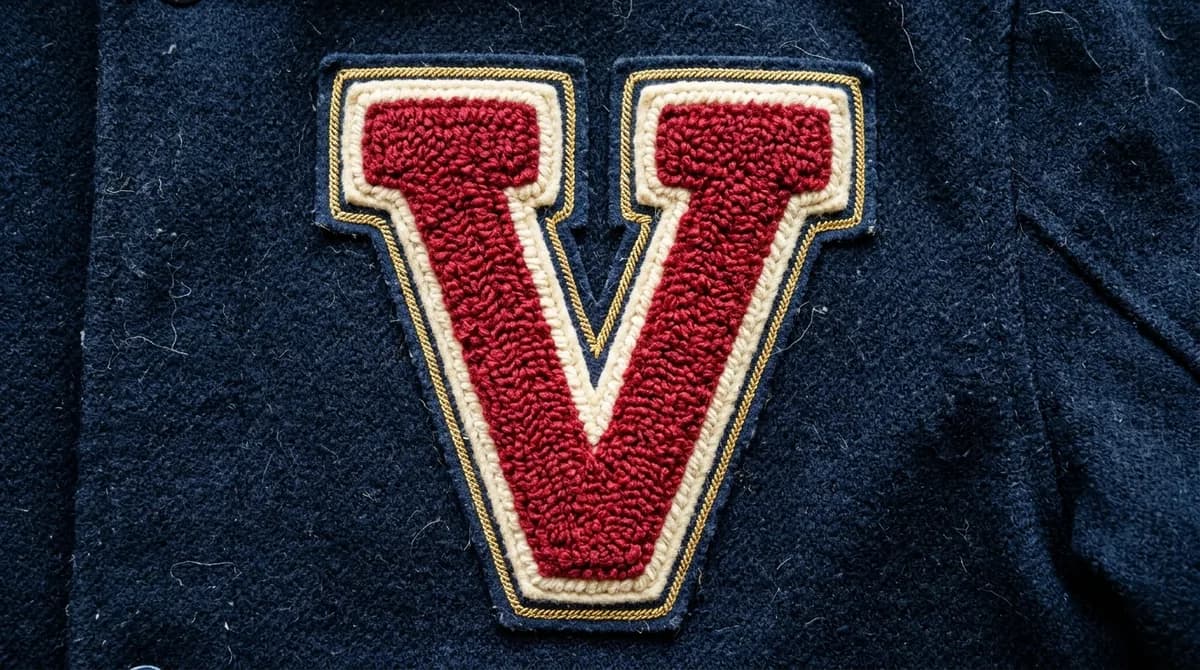
For big lettering or a solid background shield, sewing twill or felt fabric and stitching only the tackdown and satin border can cut stitch count by more than half compared with solid fill, and the result is lighter and more flexible. This is the classic varsity look; see what is tackle twill and our applique digitizing service.
Common Jacket Back Problems and Fixes
| Problem | Likely cause | Fix |
|---|---|---|
| Outlines do not line up with fills | Fabric pulled in during large fills | Center-out sequence, more pull compensation, firmer hooping |
| Panel cups or puckers around the design | Too much density or tearaway backing | Cutaway backing, lighter density, split fills with varied angles |
| Design is stiff like a board | Stacked layers and solid fill everywhere | Remove hidden layers, use applique for large shapes |
| Frequent thread breaks | High speed on thick fabric, worn needle | Slow to about 600 to 750 spm, fresh needle |
| Hoop marks on nylon or leather | Standard hoop clamped too tight | Magnetic hoop or float on sticky backing |
Jacket Back Digitizing Cost
Most jacket backs are over 15,000 stitches, which puts them on Velora's $19.99 Rush plan (unlimited stitches and revisions, 2 to 4 hour delivery). Smaller lettering-only backs can fit the $12.99 Standard plan (up to 15,000 stitches). See digitizing prices or the digitizing cost guide.
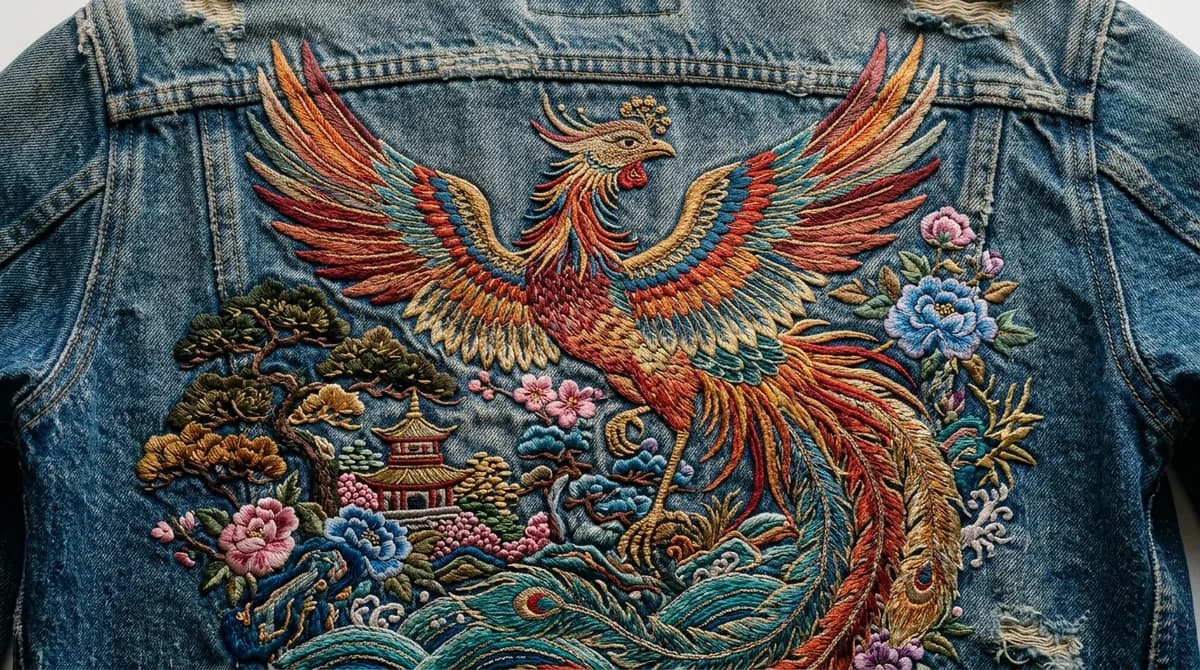
See examples in our jacket back digitizing portfolio, and for specific jackets read custom denim jacket embroidery. Ready to order? Send your artwork with the finished size and jacket fabric, or start at our embroidery digitizing services page.
Written by the Velora Digitizing Team
Digitizing StudioThis guide is written and reviewed by the digitizers at Velora Digitizing, who prepare embroidery files for caps, jackets, patches, and left chest logos every day. The advice here comes from the same stitch-path, underlay, and fabric choices we make on client orders.
Related service
Embroidery Digitizing Services