Embroidery on Towels & Fleece: The Complete Knockdown Stitch Guide
Stitching on towels, fleece, or sherpa? Discover how knockdown stitches tamp down fluffy pile so monograms and logos sew crisp without sinking into terry loops.

Embroidery Digitizing Studio
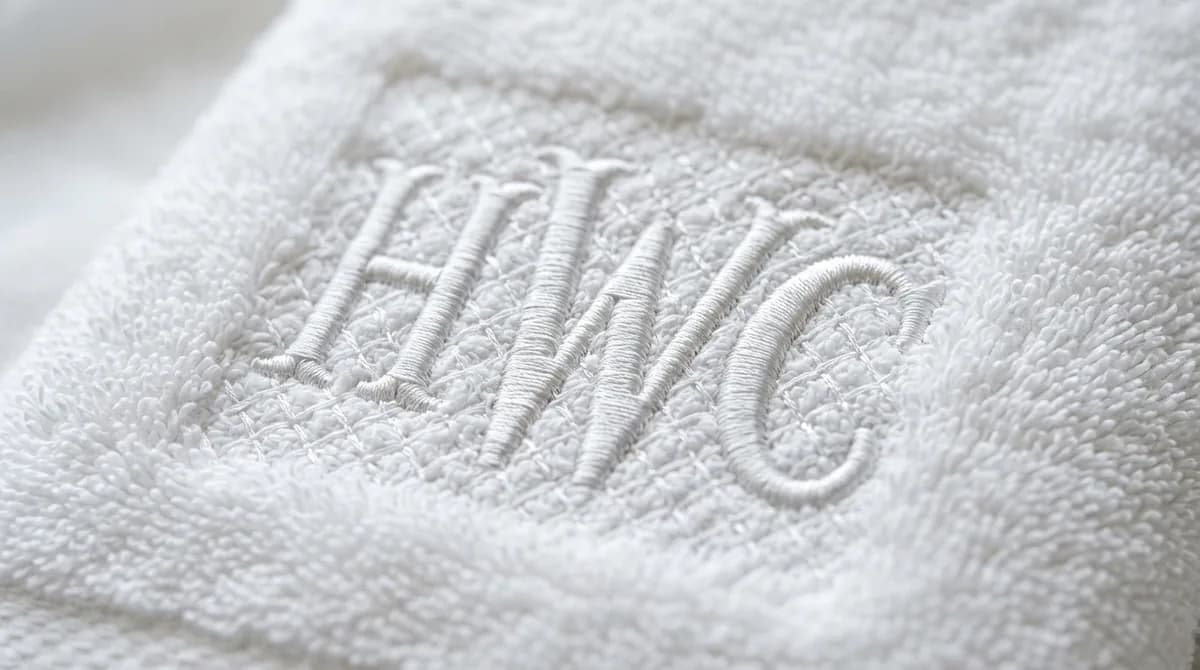
Every embroidery business owner has experienced the frustration of stitching a gorgeous corporate logo or wedding monogram on plush terrycloth towels or heavyweight sherpa fleece, only to pull it out of the hoop and watch the stitches completely disappear into the fluffy fabric pile.
Fluffy fabrics — including velour, microfiber, coral fleece, and waffle weaves — possess high surface fibers known as pile or nap. Without proper digitizing intervention, needle threads sink into the loops, edges look jagged, and detail is lost. The professional solution is a Knockdown Stitch.
Why Standard Underlay Fails on High-Pile Fabrics
Standard embroidery designs rely on edge-run or center-walk embroidery underlay types to stabilize smooth woven cotton or polyester garments. On a dense towel, however, these narrow underlay paths fall directly between terrycloth loops.
When top satin stitches sew over them, the tension pulls the thread down into the valley of the pile. Temporary wash-away film (like Sulky Solvy or Madeira Avalon) helps during the sew-out, but after the first laundry wash, the film dissolves and loops spring back up through the stitches, ruining your work.
How to Digitize a Knockdown Stitch in Your Software
Modern digitizing software suites like Wilcom EmbroideryStudio, Hatch, and Brother PE-Design offer specialized tools to generate knockdown underlays. If your software does not have an automatic feature, here is how to build one manually:
- 1Generate an Offset Silhouette: Create an outline around your entire logo or monogram with an offset outward margin of 1.5mm to 2.5mm.
- 2Apply Open Cross-Hatch / Tatami Fill: Set the fill type to a loose Tatami or net/mesh fill with a density of 2.5mm to 3.2mm (open spacing). Do not make it solid embroidery; it should look like a light window screen.
- 3Calibrate Stitch Length: Set stitch length between 2.2mm and 2.8mm to prevent fabric puckering and keep the foundation flexible without stiff board-like feel.
- 4Sequence at Step 01: Position the knockdown block as the very first stitch sequence in your file, before any logo underlay or top stitching begins.
- 5Optional Decorative Border: For luxury bath towels and hotel robes, digitize a soft running stitch or delicate satin border around the knockdown perimeter to create an intentional embossed plaque aesthetic.
Stabilizer & Hooping Formula for Towels and Fleece
Digitizing is only half the battle when working with plush goods. You must combine your knockdown digitizing file with the correct hooping workflow to prevent fabric puckering and distortion:
- Backing (Bottom): Use a medium 2.5oz or heavy 3.0oz tearaway or cutaway stabilizer. For heirloom bath towels that will be viewed from both sides, a firm wash-away mesh backing prevents ugly backing paper on the back.
- Topping (Top): Place a sheet of lightweight water-soluble topping over the hoop. The topping guides the needle cleanly through the knockdown layer during sewing.
- Hoop Pressure: Avoid clamping thick terrycloth in standard round hoops with extreme screw tension, which causes permanent hoop burn. Use magnetic hoops or float the towel over sticky adhesive stabilizer.
Get Flawless Towel & Fleece Digitizing with Velora
Whether you are embroidering luxury spa bath towels, varsity fleece hoodies, or monogrammed wedding blankets, digitizing files must be engineered with custom push-pull compensation and calibrated nap suppression.
At Velora Digitizing, our master punchers analyze your exact garment fabric and supply files with programmed color stops, calibrated knockdown underlay grids, and machine-tested sew-out files delivered in 8 to 24 hours.
Written by the Velora Digitizing Team
Digitizing StudioThis guide is written and reviewed by the digitizers at Velora Digitizing, who prepare embroidery files for caps, jackets, patches, and left chest logos every day. The advice here comes from the same stitch-path, underlay, and fabric choices we make on client orders.
Related service
Custom Embroidery Digitizing Services