Embroidered vs Woven vs PVC Patches: The Difference (Plus Leather and Chenille)
Embroidered, woven or PVC? Compare how each patch is made, how much detail it holds, how it wears outdoors and when leather or chenille is the better pick.
Embroidery Digitizing Studio
Commercial Digitizing Service
Need production-ready machine files? Explore our Custom Patches Manufacturing
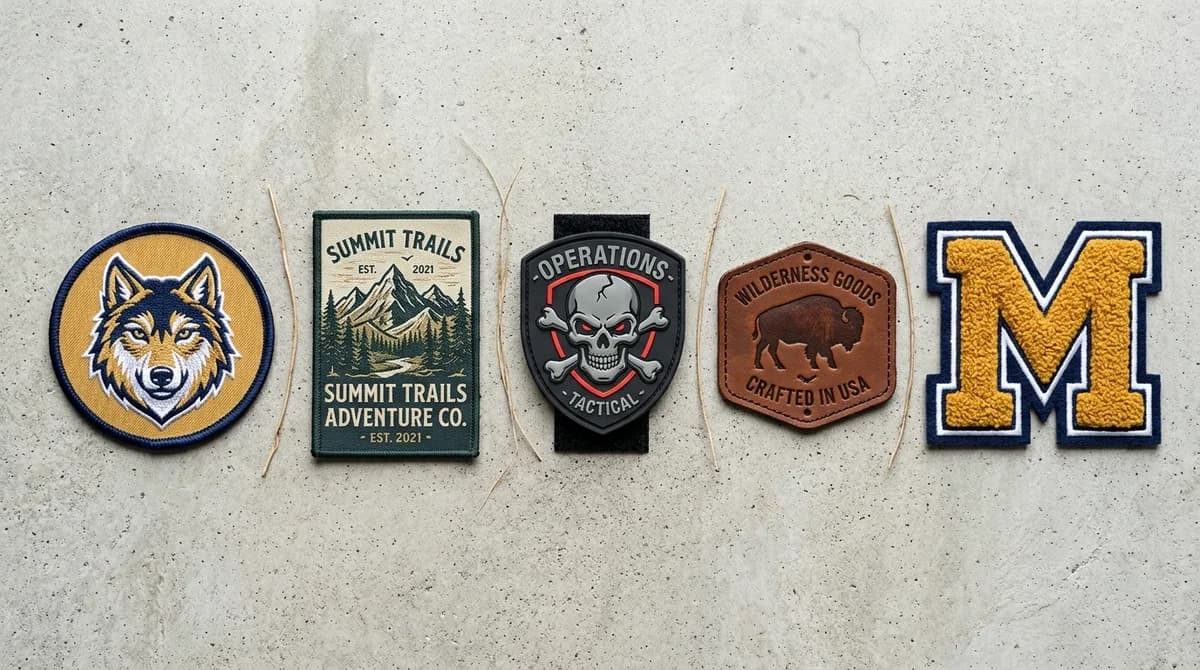
The difference between embroidered vs woven vs PVC patches is how the design is made. Embroidered patches are stitched with thick thread on a twill base, so they have a raised texture but limited fine detail. Woven patches are made on a loom with much thinner thread, so they are flat and hold small text and fine lines. PVC patches are molded from soft rubber, so they are waterproof, very durable and can be raised in layers.
Below is each type in detail, plus leather and chenille patches, border choices and a side-by-side comparison to help you choose.
1. Embroidered Patches: The Classic Standard
Embroidered patches are the timeless gold standard. Thick polyester threads are stitched onto a heavy cotton/polyester twill backing, creating tactile texture and rich vintage appeal.
- Embroidery Coverage Tiers: 50% Coverage (background twill remains visible), 75% Coverage, or 100% Full Coverage (every millimeter is solid embroidery).
- Best For: Military insignia, motorcycle club vests, sports jerseys, scout badges, and corporate workwear.
- Pros: Authentic vintage texture, highly durable, cost-effective in bulk.
- Cons: Cannot reproduce tiny text under 4mm or intricate photographic gradients.
2. Woven Patches: Maximum Detail and Clean Typography
Unlike embroidered patches that stitch on top of a fabric base, woven patches weave microscopic 50-denier warp and weft threads together into a single flat textile.
- Resolution Capability: Can cleanly reproduce text as small as 2.0mm and intricate linework.
- Profile: Completely flat, smooth, lightweight surface with zero bulk.
- Best For: Detailed corporate logos, anime designs, intricate emblems, and lightweight activewear.
3. PVC Patches: Waterproof, Rugged & 3D Molded
PVC (Polyvinyl Chloride) patches are manufactured from liquid rubber poured into custom aluminum CNC molds and cured with heat.
- 3D Multi-Layer Relief: Allows multi-tier 2D stepped relief or fully sculpted 3D curved surfaces.
- Extreme Durability: 100% waterproof, resistant to mud, gasoline, extreme heat, and saltwater.
- Best For: Tactical morale patches, paintball gear, outdoor backpacks, hats, and marine uniforms.
4. Genuine & Faux Leather Patches: Premium & Rustic
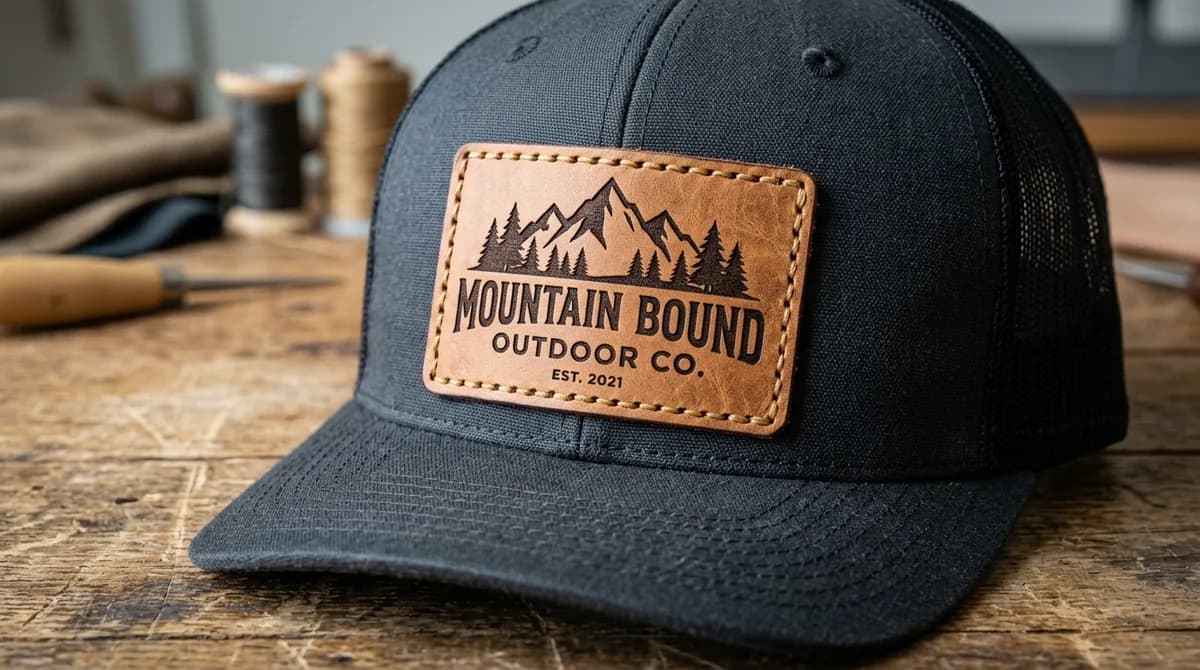
Cut from genuine full-grain leather or synthetic leatherette, these patches feature laser-engraved, debossed, or foil-stamped branding.
- Aesthetic: Rugged, artisanal, and luxury outdoor look.
- Best For: Trucker hats (Richardson 112 / Yupoong), denim jackets, beanie cuffs, and brewery merchandise.
5. Chenille Patches: Varsity Retro Fluff
Created with looping yarn stitched onto wool felt backing, producing the iconic fuzzy texture seen on collegiate letterman jackets and streetwear streetwear hoodies.
PVC Patches vs Embroidered Patches: Head-to-Head
The two patch types brands most often weigh against each other are classic embroidered thread emblems and molded PVC rubber badges. They are made in completely different ways, and that drives everything from weather resistance to the price of a 25-piece order.
Material and manufacturing
- Embroidered patches are stitched in polyester or rayon thread onto a heavy twill base and finished with a merrowed or heat-cut satin border. The only tooling is the digitized stitch file.
- PVC patches are made from liquid polyvinyl chloride poured into a custom CNC-milled metal mold and heat-cured into a flexible rubber badge with 2D or layered 3D relief.
Weather and wear
- PVC: 100% waterproof and mud-proof. Dirt wipes off with a damp cloth, and the material resists heat, sub-zero cold and UV fading, which is why it dominates tactical gear, search-and-rescue teams and outdoor sportswear.
- Embroidered: Very durable on jackets, caps and everyday apparel, but thread can snag on brambles and absorb grease or moisture in heavy industrial use.
Detail and visual style
- Choose embroidered when you want a textured, heritage fabric look for trucker hats, bomber jackets, school clubs or corporate uniforms.
- Choose PVC when the artwork needs sculpted 3D bevels, matte modern textures, glow-in-the-dark elements or typography finer than thread can resolve.
Cost and order quantity
- Embroidered: Low startup cost because a digitized file is quick to produce and there is no physical tooling. Best value for runs under 50 pieces and for designs that change often.
- PVC: A one-time mold fee up front, after which unit prices fall steeply on reorders and volume runs. Best value once an order passes a few hundred pieces and the design is final.
Embroidered vs Woven vs PVC Patches: Side-by-Side Comparison
| Embroidered | Woven | PVC | |
|---|---|---|---|
| How it is made | Thick thread stitched onto a twill base | Fine thread woven on a loom | Soft PVC rubber poured into a mold |
| Texture | Raised, stitched texture | Flat and smooth | Smooth; can be layered in 2D or 3D |
| Fine detail and small text | Limited; small text closes up | Very good | Very good; raised edges stay crisp |
| Outdoor wear | Good; thread can fray over years of use | Good | Best; waterproof and easy to clean |
| Feel | Thicker, classic badge feel | Thin and light | Flexible but heavier |
| Best for | Classic badges, uniforms and caps | Detailed logos and small lettering | Tactical, outdoor and gear patches |
- Embroidered: Traditional Look ★★★★★ | Fine Detail ★★★☆☆ | Durability ★★★★☆ | Best for Classic Badges
- Woven: Traditional Look ★★★☆☆ | Fine Detail ★★★★★ | Durability ★★★★☆ | Best for Intricate Logos
- PVC Rubber: Traditional Look ★★☆☆☆ | Fine Detail ★★★★★ | Durability ★★★★★ | Best for Outdoor / Tactical
- Leather: Traditional Look ★★★★☆ | Fine Detail ★★★★☆ | Durability ★★★★☆ | Best for Trucker Caps & Denim
- Chenille: Traditional Look ★★★★★ | Fine Detail ★★☆☆☆ | Durability ★★★☆☆ | Best for Letterman / Varsity
Order Custom Patches with Velora Digitizing
Whether you need 50 custom PVC patches for your tactical brand or 5,000 embroidered patches for corporate uniforms, Velora Digitizing provides complete patch digitizing, sampling, and manufacturing. Visit our custom patches page for a fast quote.
Patch Border Types: Merrowed vs Hot Cut vs Laser Cut
The edge of a custom patch determines both its aesthetic profile and structural longevity:
- Merrowed Border (3.5mm - 4.0mm): Created using a specialized 3-thread overlock Merrow sewing machine that wraps heavy yarn around the edge of a pre-cut twill base. Ideal for classic symmetrical shapes (circles, squares, shields, rectangles).
- Laser Heat-Cut Satin Border (1.5mm - 2.5mm): The embroidery machine sews a heavy satin stitch border around the design contour, and an automated laser cutter melts and seals the synthetic patch edge within 0.1mm of the stitches. Ideal for complex custom die-cut shapes and jagged emblems.
| Border | How it is made | Best shapes | Minimum practical size | Look |
|---|---|---|---|---|
| Merrowed | Overlock machine wraps thick thread around a pre-cut edge after embroidery | Circles, ovals, squares, rectangles, shields | About 2 in | Raised, rope-like classic edge |
| Hot cut | Patch cut with a heated knife or die that seals the fabric edge | Simple shapes with no satin edge | About 1 in | Flat, thin, modern edge |
| Laser cut with satin border | Satin border stitched in the file, then a laser cuts and seals just outside it | Detailed or irregular shapes, sharp corners | About 1 in | Clean contour that follows the design |
Choose merrowed for classic round and rectangular patches on uniforms and jackets, and laser cut when the patch follows the shape of the logo. Hot cut suits woven and printed patches where a raised edge would cover fine detail. For backings (iron-on, sew-on, hook and loop, adhesive), see iron-on vs sew-on patches.
Compare our felt patch samples and twill patch samples. For your own custom patch, share the artwork, finished dimensions, quantity, and backing requirements with our team for a quote.
Next steps: learn how to make embroidered patches, compare iron-on vs sew-on patches and plan uniform embroidered name patches.
Written by the Velora Digitizing Team
Digitizing StudioThis guide is written and reviewed by the digitizers at Velora Digitizing, who prepare embroidery files for caps, jackets, patches, and left chest logos every day. The advice here comes from the same stitch-path, underlay, and fabric choices we make on client orders.
Related service
Custom Patches Manufacturing