Iron-On vs Sew-On Patches: Which Lasts Longer and When to Use Each
Iron-on patches are quick; sew-on patches last. Here is how the two backings compare and how to choose the right one for your garment and order.

Embroidery Digitizing Studio
Commercial Digitizing Service
Need production-ready machine files? Explore our Custom Patch Digitizing
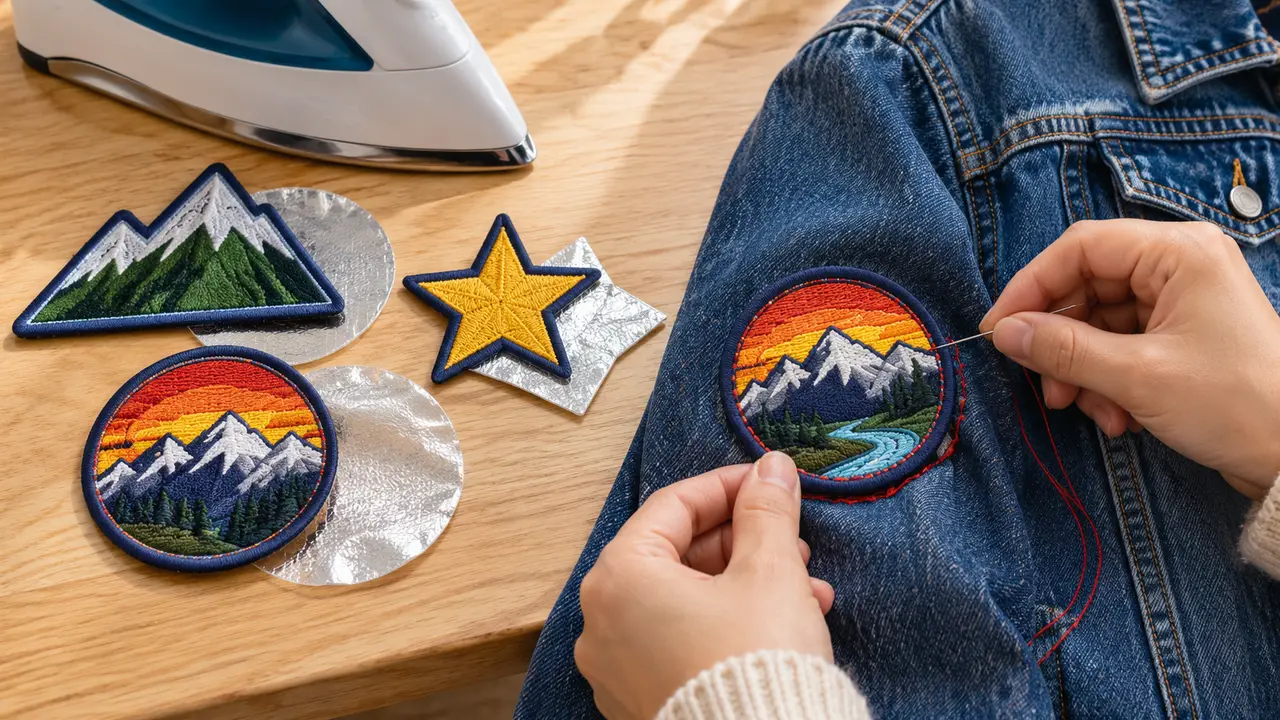
Iron-on vs sew-on patches: sew-on patches last longer and work on any fabric, while iron-on patches are faster to apply but can loosen with heat and repeated washing. For uniforms, workwear and anything washed often, sew-on is the safer choice. For fashion pieces, denim and quick projects, iron-on is convenient, and you can always iron it on first and then stitch around the edge.
This guide compares durability, fabrics, cost and application for both backings. We digitize patch designs ready for production through our custom patch digitizing service.
Iron-On vs Sew-On Patches at a Glance
| Iron-on | Sew-on | Hook-and-loop (velcro) | |
|---|---|---|---|
| Durability | Good; can lift at the edges over time | The most durable | Durable, and the patch itself can be swapped |
| Time to apply | About a minute with an iron or heat press | Several minutes by hand or machine | The loop side is sewn on once |
| Fabrics | Heat-safe fabrics such as cotton, denim and canvas | Almost any fabric | Almost any fabric |
| Washing | Gentle washing; high heat weakens the adhesive | Survives heavy and industrial washing | Remove the patch before washing |
| Removable | No | No, without unpicking | Yes |
| Extra cost | A small cost per patch for the heat-seal backing | None for the patch; labor to sew | A small cost per patch for the hook backing |
| Best for | Fashion, merch, denim, quick projects | Uniforms, workwear, leather, anything washed often | Tactical gear, uniforms with interchangeable patches |
When to Choose Iron-On Patches
- Denim jackets, cotton caps and canvas bags; see our denim jacket embroidery guide and tote bag embroidery guide.
- Fashion and merch where speed matters.
- Customers applying patches themselves at home.
- Positioning a patch before stitching it permanently.
When to Choose Sew-On Patches
- Uniforms, workwear and anything industrially washed.
- Nylon, polyester, leather and heat-sensitive fabrics; see embroidery on leather.
- Curved or flexible areas such as sleeves and caps; see sleeve embroidery.
- Name patches on work shirts; see embroidered name patches.
- Heavy patches like chenille; see the chenille and varsity patch guide.
Which Patch Backing for Which Fabric
| Fabric or item | Recommended backing | Reason |
|---|---|---|
| Cotton, denim, canvas | Either; iron-on plus a stitched edge is the strongest | These fabrics take heat well |
| Polyester and performance fabrics | Sew-on | High heat can glaze or scorch the fabric |
| Nylon, rainwear and waterproof shells | Sew-on | Heat can melt the fabric or damage the coating |
| Leather and vinyl | Sew-on | Heat marks the surface and adhesive bonds poorly |
| Stretchy knits | Sew-on | The adhesive cracks as the fabric stretches |
| Caps and curved panels | Sew-on, or heat-applied with a cap press | A flat iron cannot press a curve evenly |
| Backpacks and bags | Sew-on | Thick seams and coatings resist heat-seal adhesive |
How to Apply an Iron-On Patch
- 1Pre-wash and dry the garment to remove sizing and prevent shrinkage later.
- 2Place the patch, adhesive side down, on a hard flat surface.
- 3Cover with a thin cloth and press with a hot iron (no steam) or heat press for the time the supplier recommends, often about 30 seconds or more.
- 4Turn the garment inside out and press the back of the area as well.
- 5Let it cool completely before moving it, then check the edges.
- 6For extra hold, stitch around the border.
How to Sew On a Patch
- 1Pin or temporarily glue the patch in position.
- 2Use thread that matches the patch border.
- 3Stitch just inside the border with a straight stitch, zigzag or by hand with small whip stitches.
- 4Backstitch at the start and end to lock the thread.
- 5On thick items, use a heavier needle; see the needle size guide.
Patches vs Direct Embroidery
Patches are a great alternative when an item is hard to hoop, such as structured caps, backpacks and finished leather goods, or when you want to make patches in bulk and apply them later. Direct embroidery looks more integrated on polos and hoodies. Compare the options in embroidery vs screen printing and the custom patch types guide.
Need a patch file? Send your artwork, finished size, border type and backing through our contact page, or see digitizing prices.
Written by the Velora Digitizing Team
Digitizing StudioThis guide is written and reviewed by the digitizers at Velora Digitizing, who prepare embroidery files for caps, jackets, patches, and left chest logos every day. The advice here comes from the same stitch-path, underlay, and fabric choices we make on client orders.
Related service
Custom Patch Digitizing