What Size Should an Embroidered Name Patch Be? Sizes, Fonts and Backings
Most name patches are about 3.5 x 2 inches, but the right size depends on the shirt and the longest name. Sizes, letter counts, fonts and backings in one place.

Embroidery Digitizing Studio
Commercial Digitizing Service
Need production-ready machine files? Explore our Custom Patch Digitizing
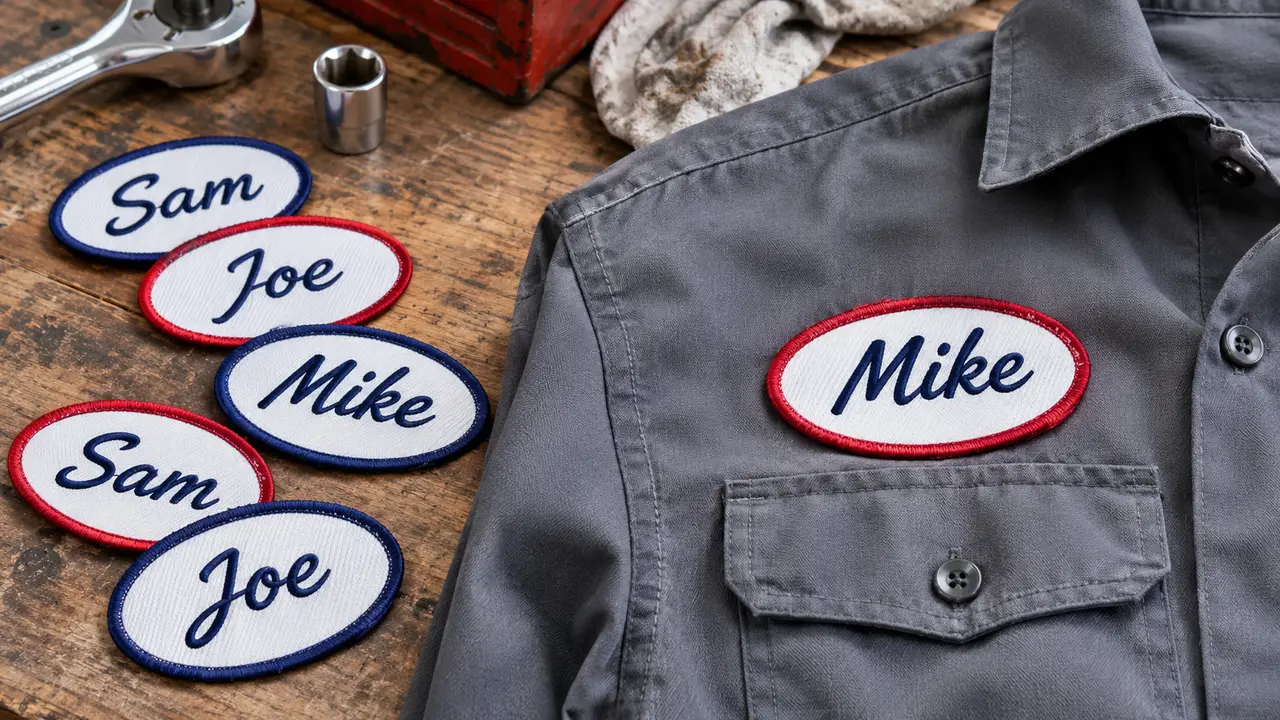
An embroidered name patch should usually be about 3.5 x 2 inches on a standard work shirt, with a smaller 3 x 1.75 inch oval for women's cuts and small shirts, or a 3.5 to 5 x 1 inch name tape for tactical and security uniforms. Pick the size from your longest name so the letters stay at least about 5 mm tall. For uniforms that are washed often, choose sew-on backing (or iron-on plus stitching) and a satin or merrowed border.
This guide covers sizes, fonts, borders, backings and ordering. We digitize name patch templates so the same design can be reused with a different name on each patch through our custom patch digitizing service.
Popular Name Patch Shapes and Sizes
| Shape | Typical size | Typical use |
|---|---|---|
| Oval | About 3.5 x 2 inches | Classic workwear and mechanic shirts |
| Rectangle | About 3.5 x 2 inches | A cleaner, modern look |
| Name tape | About 4 to 5 x 1 inch | Military, tactical and security uniforms |
| Rounded rectangle with logo | About 4 x 2.5 inches | Company logo plus the name |
| Round | About 3 inches across | Short names or initials |
What Size Should an Embroidered Name Patch Be?
On a standard work shirt, a name patch about 3.5 inches wide by 2 inches tall fits above the pocket without reaching the seams. Smaller shirts, women's cuts and thin fabrics look better with a 3 x 1.75 inch oval or a 3.5 x 1 inch name tape. The deciding factor is usually the longest name on your list, because the letters must stay at least about 5 mm tall to read across a counter or a shop floor.
| Patch size | Letter height (approx.) | Characters on one line (approx.) |
|---|---|---|
| 3 x 1.75 in oval | 8 to 10 mm | 6 to 8 |
| 3.5 x 2 in oval or rectangle | 9 to 12 mm | 8 to 10 |
| 4 x 2.5 in rectangle | 10 to 14 mm | 10 to 12 |
| 3.5 x 1 in name tape | 6 to 8 mm | 10 to 12 in block capitals |
| 5 x 1 in name tape | 6 to 8 mm | 14 to 16 in block capitals |
Script fonts take more width per letter than block capitals, so allow fewer characters for script. For names longer than the patch allows, use a first name only, an initial plus last name, or a two-line layout with a smaller second line.
Where to Put a Name Patch
- Above the left pocket when the shirt has no company logo, the classic mechanic shirt look.
- Right chest with the company logo on the left chest, the most common uniform layout; see the left chest placement guide for measurements.
- Centered about 1 inch above the pocket when the shirt has pockets; on pocketless shirts, about 7 to 9 inches below the shoulder seam on adult sizes.
- Jackets: same chest positions; use hook-and-loop backing if the jacket is shared.
Choosing the Font
- Script: vintage workwear look; best with bold, connected strokes.
- Block or sans-serif: easiest to read for staff and security uniforms.
- Collegiate: sports and team jackets; see tackle twill for larger letters.
- Chain stitch style: retro look; see chain stitch embroidery.
Long names need a smaller font to fit, so check the longest name on your list first. See best fonts for embroidery and small text embroidery.
Borders and Backings
| Option | What it is | Best for |
|---|---|---|
| Satin border | A stitched satin edge, made on any embroidery machine | Any shape, including custom outlines |
| Merrowed border | A thick overlocked edge | Ovals, circles and rectangles |
| Sew-on backing | Plain backing, sewn to the garment | Uniforms and heavy washing |
| Iron-on backing | Heat-seal adhesive | Cotton shirts; add stitching for durability |
| Hook-and-loop backing | Velcro hook side on the patch | Removable names on tactical and medical uniforms |
Name Patches vs Direct Name Embroidery
Direct embroidery stitches the name straight onto the shirt, which looks clean on polos and is cost-effective for a few pieces. Patches can be made in bulk and applied to any garment later, including jackets that are hard to hoop, and they move easily to a new shirt. See how to embroider a shirt, best polo shirts for embroidery and sleeve embroidery.
How to Order Custom Name Patches
- 1Choose shape, size, twill color, thread color and border.
- 2Pick a font and send a sample name for approval.
- 3Send the full name list in a spreadsheet with exact spelling and capitalization.
- 4Choose the backing: sew-on, iron-on or hook-and-loop.
- 5Approve a digital proof before production.
How to Sew a Name Patch on a Work Shirt
- 1Put the shirt on, or on a hanger, and mark the center of the patch position with chalk.
- 2Pin or tape the patch in place, checking it is level with the pocket top or the shirt's front edge.
- 3With a sewing machine, use a straight stitch or narrow zigzag just inside the border, with thread that matches the border color.
- 4By hand, use a whip stitch through the border every 3 to 4 mm.
- 5For iron-on patches, press first, then stitch the edge for shirts that go through industrial laundry.
Making Name Patches In-House
If you have an embroidery machine, you can stitch name patches in batches from one template file. Our guide on how to make embroidered patches covers materials, borders and cutting. For pricing your patches, see how much embroidery costs.
Need a name patch template or patch file? A simple name patch with a border usually fits within our Basic plan ($6.99, up to 5,000 stitches, 24 to 48 hours). Send your design and name list, or check digitizing prices. Learn more about other patch styles in custom patch types.
Written by the Velora Digitizing Team
Digitizing StudioThis guide is written and reviewed by the digitizers at Velora Digitizing, who prepare embroidery files for caps, jackets, patches, and left chest logos every day. The advice here comes from the same stitch-path, underlay, and fabric choices we make on client orders.
Related service
Custom Patch Digitizing