Pique vs Dri-Fit Polo for Embroidery: Best Polo Shirts, Fabric and Weight
Pique cotton and dri-fit polyester both take embroidery, but they need different stabilizer, needles and files. Here is how they compare and what to look for in a polo blank.
Embroidery Digitizing Studio
Commercial Digitizing Service
Need production-ready machine files? Explore our Left Chest Logo Digitizing
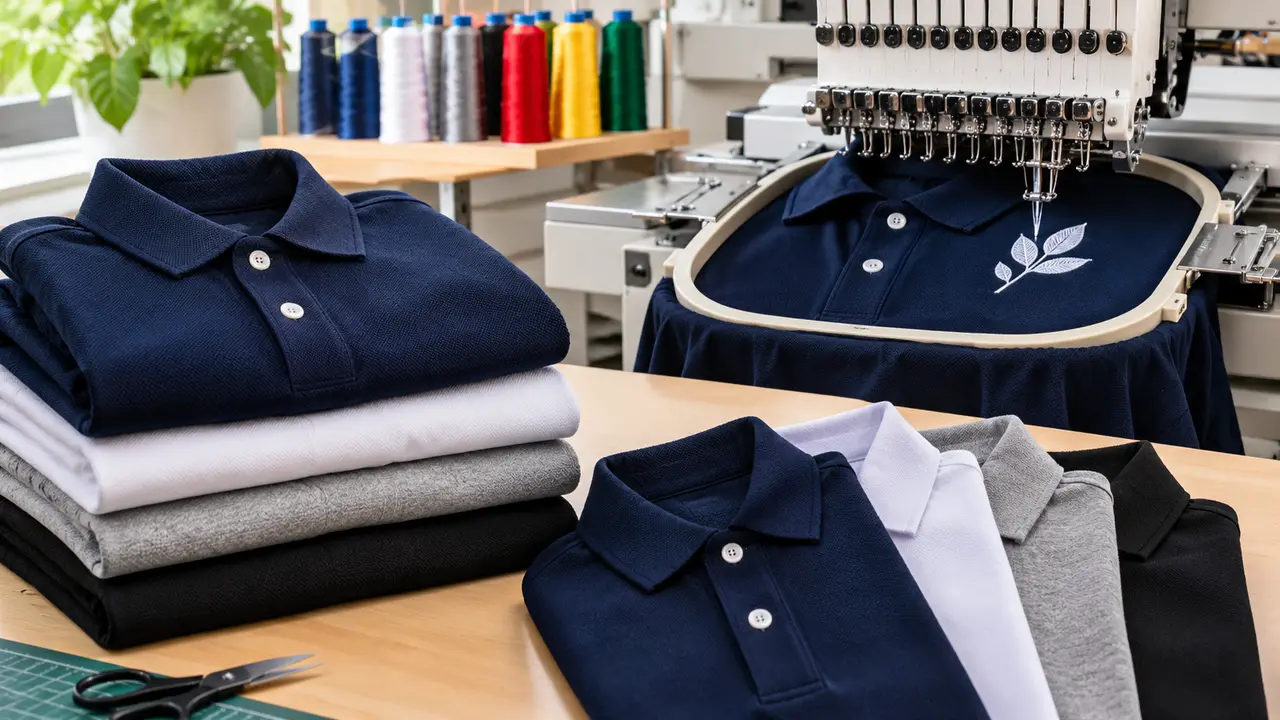
In the pique vs dri-fit polo for embroidery choice, pique is the easier fabric: its textured cotton or cotton-blend knit is stable and hides the stabilizer, so logos stitch flat. A dri-fit (polyester performance) polo also embroiders well, but it is thinner and stretchier, so it needs a no-show mesh cutaway, a fine ballpoint needle and a lighter, well-underlaid file to avoid puckering. Either way, the best polo shirts for embroidery are stable, medium-weight knits that hold stitches without stretching.
Polo shirt embroidery is one of the most common jobs in any shop, but problems usually trace back to two decisions: the blank you chose and how the logo file was built for it. This guide covers both. When your polo is chosen, our logo digitizing team can prepare a file matched to that fabric.
Polo Fabrics Compared for Embroidery
| Polo fabric | Typical weight | How it embroiders | Stabilizer | Needle | Logo density |
|---|---|---|---|---|---|
| Cotton or cotton-blend pique | About 5.5 to 7 oz | Easiest. The textured knit grips stitches and hides needle holes | Medium cutaway | 75/11 ballpoint | Standard |
| Polyester performance | About 3.8 to 4.5 oz | Harder. Smooth and stretchy, shows puckering and needle holes | No-show mesh or soft cutaway | 65/9 or 70/10 ballpoint | Lighter, with open fills |
| Jersey knit | About 5 to 6 oz | Moderate. Thin, so dense logos pull and ripple | Soft cutaway | 70/10 or 75/11 ballpoint | Lighter, small open designs |
Cotton and Cotton-Blend Pique
Pique has a raised, textured knit that grips stitches and hides needle holes. It is forgiving, looks professional and suits most corporate logos. Blends such as 60/40 or 50/50 cotton-polyester keep that stability while shrinking and fading less than pure cotton.
Polyester Performance Polos
Performance polos are smooth, light and stretchy. They wick moisture, which makes them popular for golf, sports and outdoor staff. The trade-off is that they show puckering and needle holes more easily. Keep logos lighter, use a ballpoint needle and a cutaway or no-show mesh stabilizer, and avoid large solid fills.
Jersey-Knit Polos
Smooth jersey polos feel like a T-shirt. They are thin, so dense logos can pull and ripple. They work best with small, open designs and a soft cutaway backing.
Pique vs Dri-Fit Polo for Embroidery
This is the choice most buyers actually face. Both take embroidery, but they need different files and different backing, and a logo that sews perfectly on pique can ripple on dri-fit if nothing is changed.
| Cotton or blend pique | Dri-fit / polyester performance | |
|---|---|---|
| How the fabric behaves | Textured, stable, little stretch | Smooth, thin, stretches in both directions |
| Needle holes | Hidden by the texture | Can show around dense areas |
| Logo density | Standard density is fine | Lighter density; avoid large solid fills |
| Small text | Holds letters down to about 5 mm | Keep letters a little larger and bolder |
| Backing | Medium cutaway | No-show (poly) mesh cutaway, fusible if available |
| Needle | 75/11 sharp or ballpoint | 75/11 ballpoint |
| Washing | Can shrink slightly if 100% cotton | Stable; low-heat drying protects the logo |
| Best for | Corporate uniforms, front desk, restaurant staff | Golf, sports teams, outdoor and field crews |
How to Embroider a Dri-Fit Polo Without Puckering
- 1Ask for a performance version of the file. Lower fill density, a lighter underlay and slightly more pull compensation stop the logo from drawing the fabric in. Tell your digitizer the polo is dri-fit before the file is made.
- 2Use no-show mesh cutaway. Fusible mesh, pressed on lightly, keeps the knit from shifting. Tearaway is not enough on stretch fabric.
- 3Hoop without stretching. The fabric should be smooth, not drum-tight. Stretching a performance knit in the hoop is the most common cause of ripples once it is unhooped.
- 4Fit a fresh 75/11 ballpoint needle. A sharp or worn needle cuts the fibres and leaves visible holes.
- 5Slow the machine down. Running a little slower than usual on thin performance knit reduces flagging (the fabric bouncing with the needle).
- 6Trim the backing neatly and press from the back on low heat. High heat can mark polyester.
If ripples still appear, the cause is usually the file density or the hooping, not the machine. Our puckering and thread break guide walks through the checks in order.
What to Look for in a Polo Blank
- Fabric weight: about 5 oz or heavier is the easiest to embroider; very light polos need lighter designs.
- Stable knit: pique or a tight knit holds the logo better than a loose, stretchy weave.
- Flat placket area: a clean chest area with no seams near the logo position makes hooping easier.
- Color range: a consistent color range lets you order the same logo across departments.
- Size range and fit: check that ladies and youth cuts are available so logo placement stays consistent.
- Shrinkage: pre-shrunk or blended fabrics keep the logo from distorting after washing.
How to Digitize a Logo for Polo Shirts
- 1Match density to the fabric: lighter density for performance and jersey polos, standard density for heavy pique.
- 2Use good underlay: an edge run plus a light zigzag or tatami underlay holds the knit flat before the top stitches.
- 3Add pull compensation: knits pull inward as they are stitched, so columns are widened slightly to keep shapes accurate.
- 4Keep small text readable: text under about 5 mm needs special handling. See our small text embroidery guide.
- 5Plan the size: most left chest logos are 3 to 4 inches wide. Use the left chest logo placement guide to mark the position.
Polo Logo Size and Placement at a Glance
| Setting | Typical value |
|---|---|
| Logo width | 3 to 4 inches |
| Placement | Centre of the logo about 7 to 9 inches below the shoulder seam, centred between the placket and the side seam |
| Hoop | 4x4, or a 12 to 15 cm round tubular hoop |
| Smallest text | About 5 mm capital height in 40 wt thread |
| Thread | 40 wt polyester |
For exact measurements by garment size, see the left chest placement guide.
Stabilizer and Needle for Polo Embroidery
- Stabilizer: a medium cutaway or no-show mesh. Tearaway is not recommended for knit polos because the knit keeps stretching after the backing is removed. Our stabilizer guide compares the options.
- Needle: a 75/11 ballpoint needle helps on knits by parting fibers instead of cutting them.
- Hooping: hoop the polo smooth and firm, without stretching it. Overstretched knit springs back and causes puckering.
If you already see ripples around your logo, read how to fix embroidery puckering and thread breaks. Many fixes start with the stitch file, not the machine.
Ordering an Embroidery File for Polos
Send your logo, the finished width, the polo fabric (for example cotton pique or polyester performance) and your machine format, such as DST or PES. Most left chest logos fit our Basic or Standard plan; see current digitizing prices. If the same logo will also go on caps, ask for a separate cap version, because caps need different sequencing. Our cap and hat logo digitizing service handles that.
Ready to start? Send your logo and we will confirm the size and price before digitizing.
For the right needle on knit polos, see the machine embroidery needle size guide. Pick a hoop with our embroidery hoop sizes chart, and price your order with how much does embroidery cost.
Written by the Velora Digitizing Team
Digitizing StudioThis guide is written and reviewed by the digitizers at Velora Digitizing, who prepare embroidery files for caps, jackets, patches, and left chest logos every day. The advice here comes from the same stitch-path, underlay, and fabric choices we make on client orders.
Related service
Left Chest Logo Digitizing