Machine Embroidery Needles: Size Chart, Types & When to Change Them
The wrong needle causes skipped stitches, holes and thread breaks. Here is how to match embroidery machine needles to thread, fabric and design.
Embroidery Digitizing Studio
Commercial Digitizing Service
Need production-ready machine files? Explore our Custom Embroidery Digitizing
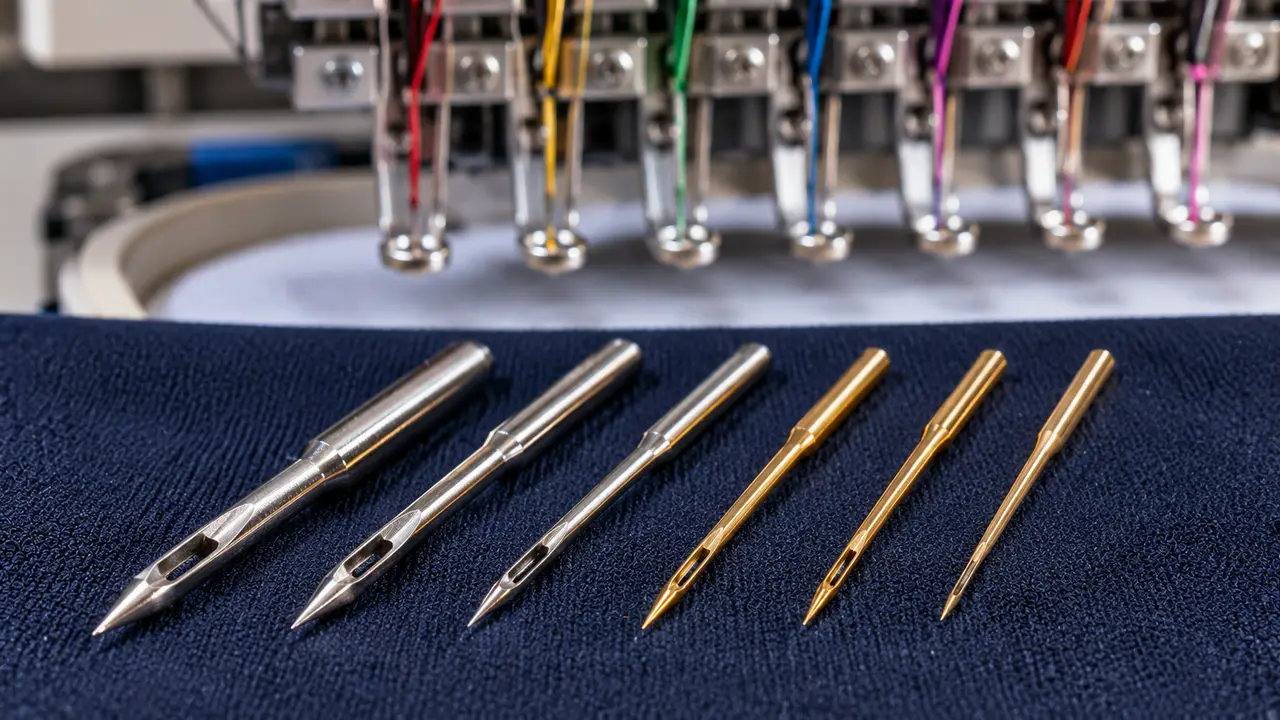
Machine embroidery needles are made for high-speed stitching, with a larger eye and a protective scarf that keeps thread from shredding. The standard size is 75/11 for 40 weight thread. Go smaller (65/9 or 70/10) for fine fabrics and fine thread, and larger (80/12 or 90/14) for caps, heavy fabric, metallic or thick thread. Pick a ballpoint for knits and a sharp point for wovens.
Needles are one of the cheapest parts of embroidery and one of the most common causes of problems. This guide covers needle sizes, points and coatings and how they work together with your thread and stitch file. A clean file from our embroidery digitizing team also reduces needle stress by avoiding overly dense areas.
Embroidery Needle Size Chart
| Needle size (metric / US) | Blade diameter | Best for | Thread |
|---|---|---|---|
| 65/9 | 0.65 mm | Very fine fabrics, small lettering, fine detail | 60 wt |
| 70/10 | 0.70 mm | Lightweight fabrics, performance knits, fine detail | 60 wt or 40 wt |
| 75/11 (standard) | 0.75 mm | Most garments: polos, T-shirts, sweatshirts, towels | 40 wt |
| 80/12 | 0.80 mm | Structured caps, twill, denim, canvas | 40 wt, 30 wt or metallic |
| 90/14 | 0.90 mm | Heavy canvas, leather, thick jackets | 30 wt and other thick threads |
The two numbers are the metric size and the US size for the same needle. The metric number is the blade diameter in hundredths of a millimeter, so a 75/11 needle is 0.75 mm thick. Thread and needle should match: see our embroidery thread weight guide for which thread pairs with each size.
Ballpoint vs Sharp Embroidery Needles
- Ballpoint (light ball): for T-shirts, polos, performance wear, fleece and beanies. It slides between knit loops, which prevents holes and runs.
- Sharp: for caps, twill, denim, canvas, woven shirts and towels. It pierces cleanly for crisp detail.
- Leather or wedge point: for genuine leather, where a cutting point makes clean holes. Use with care and light density.
| Fabric or item | Point | Usual size |
|---|---|---|
| T-shirts and jersey knits | Ballpoint | 70/10 or 75/11 |
| Pique polos | Ballpoint | 75/11 |
| Performance and dri-fit knits | Ballpoint | 65/9 or 70/10 |
| Fleece, hoodies and beanies | Ballpoint | 75/11 |
| Structured caps | Sharp | 75/11 or 80/12 |
| Twill, denim and canvas | Sharp | 80/12 or 90/14 |
| Woven shirts and towels | Sharp | 75/11 |
| Leather | Leather or wedge point | 80/12 or 90/14 |
| Metallic thread on any fabric | Metallic or large-eye needle | 80/12 or 90/14 |
For garment-specific advice see our guides on polo shirts, beanies and caps.
Needle Systems: Home vs Commercial Machines
Commercial multi-needle machines commonly use DBxK5 embroidery needles, while many single-needle home embroidery machines use the 130/705 H-E system. The systems are not interchangeable, so always check your manual. If you are moving from a single-needle to a commercial machine, read our multi-needle embroidery machine guide.
Titanium and Specialty Needles
- Titanium-coated: longer life and less buildup from adhesive stabilizers. Good for high-volume shops.
- Metallic needles: larger eye to reduce friction and breakage with metallic thread.
- Anti-glue needles: help when using sticky or spray-adhesive stabilizers.
Signs You Need a New Needle
- Skipped stitches or loops on the surface.
- Thread shredding or breaking repeatedly in the same area.
- Visible holes or pulled fibers around the design.
- A popping or punching sound as the needle enters the fabric.
- Any needle strike on a hoop, clamp or hard object.
When the Problem Is the Design, Not the Needle
Very dense areas, stacked layers and tiny satin columns put heavy stress on needles. Fixing the file is often the real solution. See how to fix puckering and thread breaks, common digitizing mistakes and underlay types explained.
Heavy work such as 3D puff and cap logos needs files built for those conditions. Check our digitizing prices or send your design and tell us your fabric and needle setup.
Written by the Velora Digitizing Team
Digitizing StudioThis guide is written and reviewed by the digitizers at Velora Digitizing, who prepare embroidery files for caps, jackets, patches, and left chest logos every day. The advice here comes from the same stitch-path, underlay, and fabric choices we make on client orders.
Related service
Custom Embroidery Digitizing