Tackle Twill vs Embroidery: What Tackle Twill Is and When to Use It
Tackle twill is the stitched fabric lettering on jerseys and varsity hoodies. Here is how it compares with embroidery, how it is made and when each is the better choice.

Embroidery Digitizing Studio
Commercial Digitizing Service
Need production-ready machine files? Explore our Applique Digitizing
Tackle twill vs embroidery comes down to what fills the letter. Tackle twill covers it with a cut piece of fabric held down by a stitched border, while embroidery fills it entirely with thread. Twill is lighter, more flexible and usually cheaper on letters and numbers about 2 inches and larger; embroidery is better for small logos and fine text.
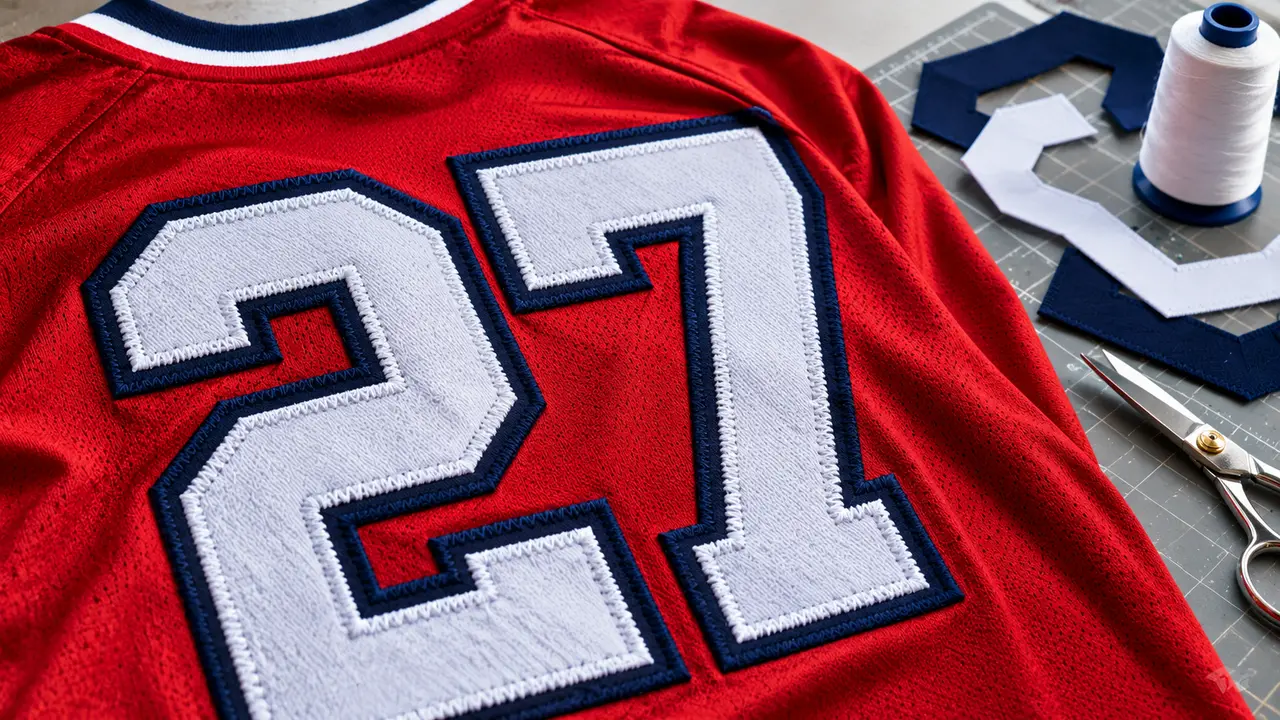
Tackle twill is a sturdy polyester twill fabric that is cut into letters, numbers or shapes and stitched onto a garment with a zigzag or satin border. It is the bold, slightly raised lettering you see on football and baseball jerseys, varsity jackets, Greek letter sweatshirts and college hoodies. Technically it is a form of tackle twill applique: fabric does the coverage, and stitches hold it in place.
This guide explains how tackle twill is made, where it works best, how it compares with embroidery and what a digitizer needs from you. We create applique and tackle twill files through our applique digitizing service.
Where Tackle Twill Is Used
- Sports jerseys: player names and numbers on football, baseball, hockey and basketball uniforms.
- Varsity and letterman jackets: often combined with chenille; see our chenille and varsity patch guide.
- Greek letter apparel: sorority and fraternity letters on sweatshirts and jackets.
- College and school hoodies: large arched names across the chest.
- Jacket backs: big team or club names; see the jacket back digitizing guide.
How Tackle Twill Is Made
- 1Design and digitize: the lettering is digitized with a placement line, a tack-down stitch and a final zigzag or satin border.
- 2Cut the twill: letters are cut from tackle twill fabric, usually with a laser or cutter using the same outline, or cut in the hoop after tack-down.
- 3Place: the machine stitches a placement line, and the operator lays the twill piece on it.
- 4Tack down: a running or light zigzag stitch holds the fabric in position.
- 5Finish the border: a zigzag or satin border covers the raw edge.
- 6Repeat for layers: multi-color twill repeats the steps for each layer.
The Three Stitch Steps in a Tackle Twill File
| Step in the file | Stitch | Purpose |
|---|---|---|
| 1. Placement line | A single running stitch | Shows exactly where to lay the twill piece |
| 2. Tack-down | A running stitch or light zigzag just inside the edge | Holds the fabric in place before the border |
| 3. Border | Zigzag or satin stitch over the raw edge | Covers and seals the edge so it does not fray |
The machine stops after the placement line so the operator can position the twill, and a two-color design repeats these steps for each layer, starting with the bottom one. Our applique digitizing guide covers this sequence in detail.
Tackle Twill vs Embroidery
| Tackle twill | Solid embroidery (fill stitch) | |
|---|---|---|
| What covers the area | Cut twill fabric with a stitched border | Thread only |
| Stitch count on large letters | Low: only the placement, tack-down and border stitch | High: the whole letter is filled |
| Feel | Flexible and fairly light | Stiffer and heavier as the letter gets bigger |
| Cost on big letters and numbers | Usually lower | Usually higher |
| Fine detail and small text | Poor | Good |
| Look | The classic athletic jersey and varsity look | A flat, stitched logo look |
| Best for | Names, numbers and letters about 2 inches tall and larger | Small logos and lettering |
- Coverage: twill covers large areas with a fraction of the stitches a fill stitch would need.
- Feel: twill stays softer and more flexible than a dense filled letter.
- Cost: for big letters, twill is usually faster and cheaper to produce.
- Detail: embroidery is better for small logos and fine lettering; twill suits bold shapes.
- Look: twill gives the classic athletic look; satin stitch borders frame each letter.
Tackle Twill Fabric
Tackle twill fabric is usually polyester with a diagonal twill weave, a slight sheen and good colorfastness. It is available in team colors and often comes with a heat-activated adhesive back. Matte and glossy versions exist, and some suppliers offer specialty finishes such as metallic or sublimated twill.
Digitizing Tips for Tackle Twill
- Use a clean placement line that exactly matches the cut shape.
- Keep the tack-down slightly inside the edge so the border fully covers it.
- Size the border width to the garment; wider borders hold better on stretchy jerseys.
- Choose block or collegiate fonts with simple shapes; see best fonts for embroidery.
- Plan the hoop for large names; see the embroidery hoop sizes chart.
Ordering Tackle Twill Files
Send us the lettering or artwork, the finished size, the number of layers and colors, the garment and your machine format. We include the placement, tack-down and border steps, plus a cut file outline if you cut twill separately. For names on uniforms, also see embroidered name patches and sleeve embroidery. Check digitizing prices or contact us for a quote.
Written by the Velora Digitizing Team
Digitizing StudioThis guide is written and reviewed by the digitizers at Velora Digitizing, who prepare embroidery files for caps, jackets, patches, and left chest logos every day. The advice here comes from the same stitch-path, underlay, and fabric choices we make on client orders.
Related service
Applique Digitizing