40 wt vs 60 wt Embroidery Thread: Weight Chart, Needles and When to Use Each
40 wt is the embroidery standard and 60 wt is the fine thread for tiny text. Here is how they differ, which needle each needs and when a file has to be redone.
Embroidery Digitizing Studio
Commercial Digitizing Service
Need production-ready machine files? Explore our Custom Embroidery Digitizing
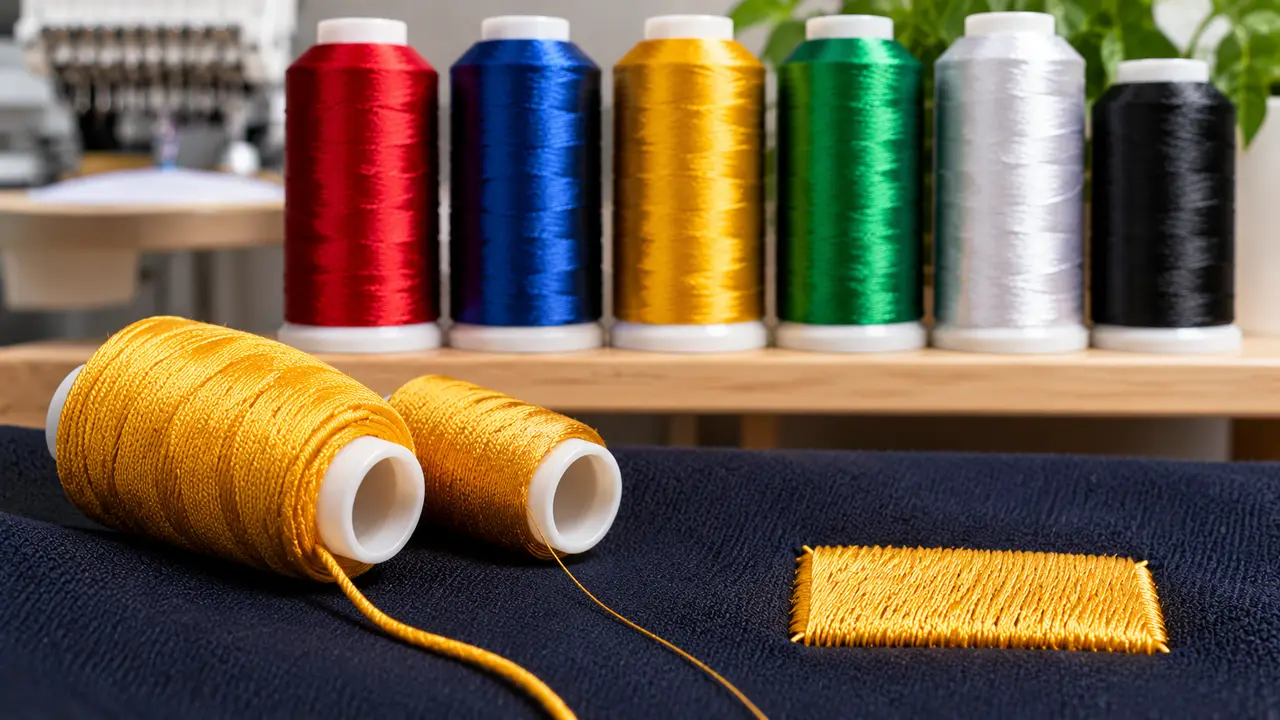
40 wt vs 60 wt embroidery thread comes down to thickness. 40 wt is the standard medium thread that almost every stitch file is digitized for, and 60 wt is roughly a third finer, so it keeps very small text and fine outlines open. In thread weight numbering a higher number means a thinner thread, and 30 wt is heavier still for bold fills. The weight you choose also changes the right needle size and the stitch density your file needs.
This guide explains how embroidery thread weight works, includes a simple thread weight chart and shows how weight affects digitizing. When you order a file from our embroidery digitizing team, tell us your thread weight so the density matches.
How Thread Weight Numbers Work
Thread weight is a length-to-mass measure: roughly, it tells you how much thread it takes to reach a set weight. Thin thread needs more length, so it gets a bigger number. That is why 60 wt is finer than 40 wt, and 30 wt is thicker. Brands label thread differently, so compare thread from the same system when you switch.
Embroidery Thread Weight Chart
| Thread weight | Thickness | Best for | Needle | Smallest clean text | Density compared with a 40 wt file |
|---|---|---|---|---|---|
| 30 wt | Heavy | Bold fills, large lettering, rustic looks on canvas, denim and outerwear | 80/12 or 90/14 | Not suited to small text | Looser: fewer stitches cover the same area |
| 40 wt (standard) | Medium | Logos, left chest designs, caps and most lettering | 75/11 | About 5 mm capital height | The baseline almost every file is digitized for |
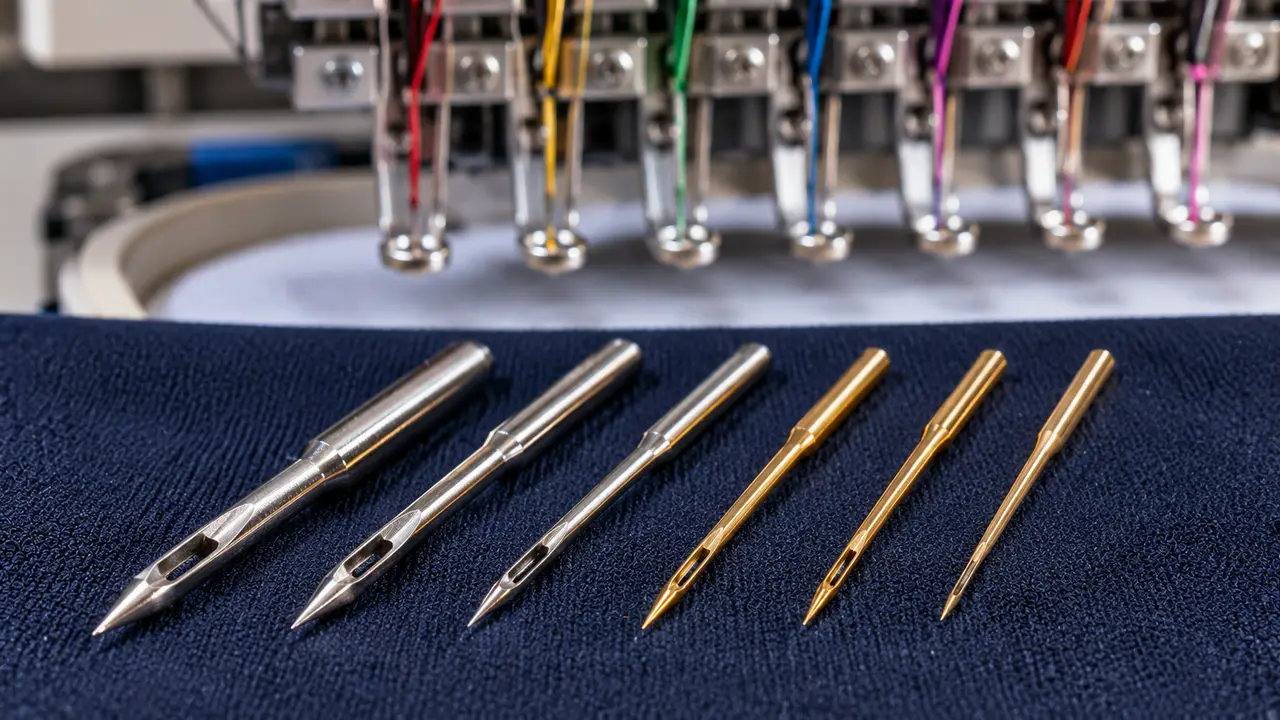
| 60 wt | Fine | Very small text, fine outlines, detailed areas | 65/9 or 70/10 | About 4 mm capital height | Tighter: more stitches are needed to cover |
| Bobbin thread (about 60 to 90 wt) | Fine | The underside of the design; keeps the back flat and the top stitches balanced | Not applicable | Not applicable | Not applicable |
| Metallic | Similar to 40 wt | Decorative highlights | Metallic or large-eye 80/12 or 90/14 | Avoid small text | Slightly looser, at a slower machine speed |
As a point of reference, standard 40 wt polyester embroidery thread is usually a two-ply 120 denier thread, and 60 wt is usually a two-ply 75 denier thread. That is roughly a third less fiber in the 60 wt, which is why it holds small letters open and why a 40 wt file looks thin when it is sewn in 60 wt.
40 wt vs 60 wt Embroidery Thread Side by Side
| 40 wt | 60 wt | |
|---|---|---|
| Thickness | Standard; usually a two-ply 120 denier polyester | Finer; usually a two-ply 75 denier polyester |
| Needle | 75/11 | 65/9 or 70/10 |
| Smallest clean capital height | About 5 mm | About 4 mm |
| Coverage | Covers at normal density | Needs tighter stitch spacing to cover the same area |
| Best for | Logos, left chest designs, caps and most lettering | Tiny text, fine outlines and small detailed designs |
| Stitch file | Most files are digitized for 40 wt by default | Works best with a file digitized for 60 wt |
In practice, stay with 40 wt unless the text drops below about 5 mm or the design has hairline detail. If you switch a whole design to 60 wt without changing the file, fills and satin columns look thin and the fabric can show through. If only the small text needs it, a digitizer can keep the logo in 40 wt and set the lettering up for 60 wt on its own color stop.
When to Use 40 Weight Embroidery Thread
Use 40 weight for nearly all commercial work: polos, caps, hoodies, jackets and towels. It gives good coverage at normal density and runs reliably at production speeds. Most stock designs and custom files assume it. For garment advice, see our best polo shirts for embroidery guide.
When to Use 60 Weight Thread
Text under about 5 mm tall closes up in 40 wt thread. Switching to 60 wt keeps letters open and readable. It also helps with fine outlines and small details in portraits. Our small text embroidery guide explains the settings, and our best fonts for embroidery guide lists fonts that stay readable.
When to Use 30 Weight Thread
Heavier 30 wt thread covers large areas with fewer stitches and gives a bolder, hand-stitched look. It works on canvas, denim and heavy outerwear. It is not a good choice for small text or detailed logos, and files should use lower density so the design does not become stiff.
Polyester vs Rayon Embroidery Thread
| Polyester | Rayon | |
|---|---|---|
| Strength | High; runs well at production speed | Lower; breaks more easily at high speed |
| Sheen | Bright, slightly harder shine | Soft, rich sheen |
| Bleach and harsh washing | Resistant | Not resistant |
| Colorfastness | Very good | Good, but fades sooner with heavy laundering |
| Best for | Uniforms, workwear, towels, kids clothing, caps | Decorative and fashion pieces |
- Polyester: strong, colorfast and bleach-resistant. The usual choice for uniforms, workwear, towels and kids clothes.
- Rayon: soft with a rich sheen. Popular for decorative and fashion pieces, but less tolerant of bleach and harsh washing.
- Cotton: matte and soft, used for heirloom or vintage looks.
- Metallic: decorative highlights. Use a metallic needle, slower speed and a design without very dense areas.
How Thread Weight Changes Digitizing
A stitch file is built for a thread thickness. Changing the thread without changing the file causes problems:
- Thinner thread on a 40 wt file: fills look thin and the fabric shows through.
- Thicker thread on a 40 wt file: too much thread in the same space, causing stiffness, thread breaks and puckering. See how to fix puckering and thread breaks.
- Small text: may need to be rebuilt as running stitches for 60 wt instead of satin columns.
Underlay and pull compensation also change with thread and fabric. Learn more in embroidery underlay types explained and the stabilizer guide.
Ordering a File for a Specific Thread
Tell us the thread weight and type, the fabric, the finished size and your machine format. We digitize for 40 wt by default and adjust density for 60 wt fine-detail work or 30 wt bold work on request. See digitizing prices or send your design for a quote. For raised lettering on caps, see 3D puff digitizing and cap logo digitizing.
Written by the Velora Digitizing Team
Digitizing StudioThis guide is written and reviewed by the digitizers at Velora Digitizing, who prepare embroidery files for caps, jackets, patches, and left chest logos every day. The advice here comes from the same stitch-path, underlay, and fabric choices we make on client orders.
Related service
Custom Embroidery Digitizing