How to Embroider on a Denim Jacket: Placement, Design Size & Hooping
Embroidered denim jackets are a classic custom piece. Here is how to plan the design, hoop around seams and stitch heavy denim cleanly.
Embroidery Digitizing Studio
Commercial Digitizing Service
Need production-ready machine files? Explore our Jacket Back Digitizing
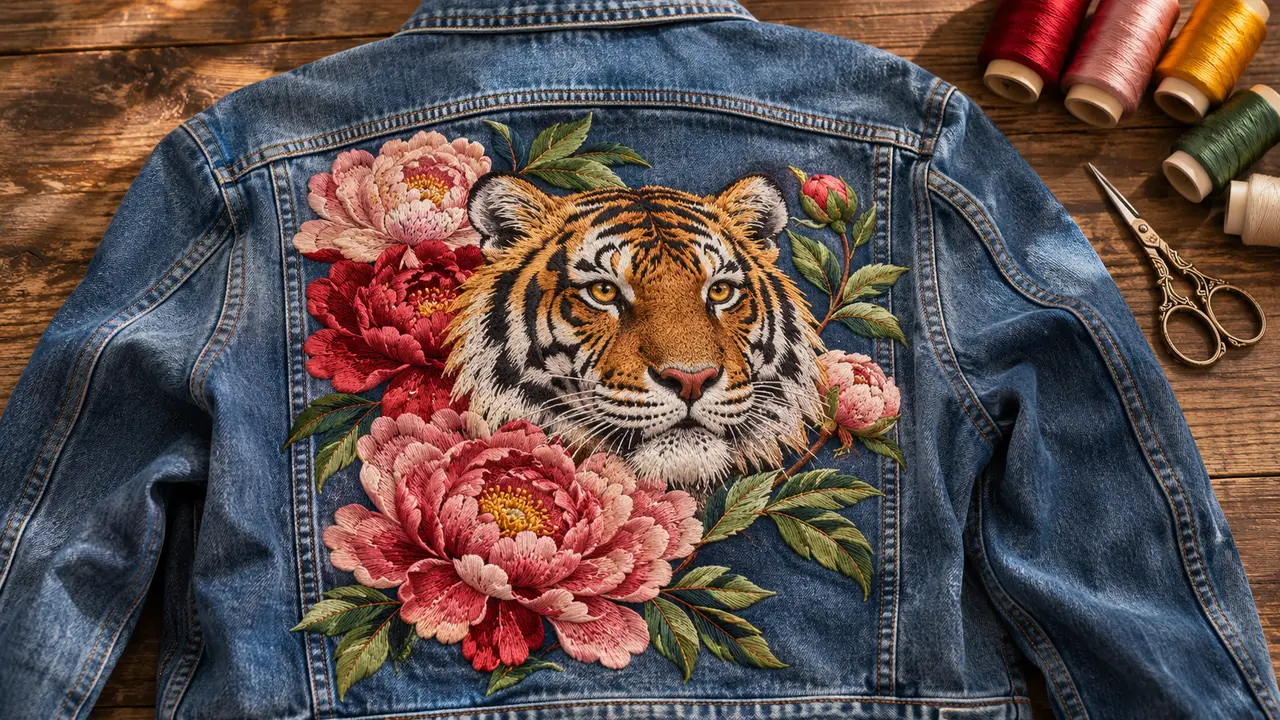
Custom denim jacket embroidery works best on the back panel, where a design of roughly 8 to 12 inches wide fits between the yoke and side seams, or as smaller designs on the chest, collar or sleeves. Denim is stable and takes dense embroidery well; the challenge is hooping around thick seams, pockets and rivets. Use a sharp 80/12 or 90/14 needle and a tearaway or cutaway depending on the design.
This guide covers placement, sizing, hooping and design tips for embroidered denim jackets. Large back designs need careful digitizing; our digitizing team builds jacket back files sized to your hoop.
Best Placements on a Denim Jacket
| Placement | Typical design size | Notes |
|---|---|---|
| Back panel | About 8 to 12 inches wide (adult jackets) | Fits between the yoke and the side seams; measure each jacket |
| Back yoke | Text about 1 to 2 inches tall | A narrow band across the upper back |
| Chest | About 3 to 4 inches wide | Above or beside the pockets; avoid the pocket flaps |
| Collar | About 1 to 2 inches | Initials or small motifs |
| Sleeve or cuff | About 2 to 3 inches | See sleeve embroidery |
Design Sizes for Denim Jackets
Check your machine's largest sewing field with our embroidery hoop sizes chart. Very large designs can be split into sections or use applique to reduce stitches; see jacket back digitizing.
The back panel is the only area big enough for a showpiece, and the sewing field of your machine usually decides the size before the jacket does. Here is what fits at common hoop sizes.
| Hoop or sewing field | Largest design (approx.) | Typical stitch count for a full design | Good for |
|---|---|---|---|
| 4 x 4 in (100 x 100 mm) | About 3.9 x 3.9 in | About 5,000 to 12,000 | Chest, collar, cuff, small back yoke text |
| 5 x 7 in (130 x 180 mm) | About 5 x 7 in | About 10,000 to 25,000 | Small back motif, script name across the yoke |
| 6 x 10 in (160 x 260 mm) | About 6 x 10 in | About 15,000 to 40,000 | Medium back design, long script names |
| 8 x 12 in and larger | About 8 x 12 in | About 25,000 to 60,000 or more | Full back pieces on adult jackets |
Stitch counts vary a lot with how much of the area is filled; an outline design or one with applique fabric areas can be a fraction of a solid fill. Use the stitch count calculator for your own design.
Can You Embroider a Denim Jacket With a Home Machine?
Yes. Single-needle home machines from Brother, Janome and BERNINA embroider denim well, and denim is one of the easier fabrics because it is stable. The limits are the sewing field (often 4 x 4 or 5 x 7 inches on entry machines) and getting the rest of the jacket out of the way. With a flatbed machine, roll the sleeves and front inside the jacket and keep the bulk to the left of the needle so it does not drag on the hoop. Multi-needle machines with a tubular arm make it easier because the jacket hangs freely.
- Pre-wash the jacket if it is new, raw or rigid denim, so it does not shrink around the design later.
- Avoid very stretchy denim for large designs, or use a cutaway stabilizer and lighter density.
- Test first. Unpicking embroidery from denim takes a long time; see how to remove embroidery if you need to.
- Mirror sleeve designs in your software or on the machine when stitching both sleeves.
What a Denim Jacket Embroidery File Costs
Digitizing is a one-time cost per design; you reuse the file for every jacket. At Velora, chest, collar and cuff designs usually fall within Basic ($6.99, up to 5,000 stitches) or Standard ($12.99, up to 15,000 stitches). Large back pieces go beyond 15,000 stitches and use Rush ($19.99, no stitch limit, 2 to 4 hour delivery). See digitizing prices for what each plan includes.
How to Embroider on a Denim Jacket
| Item | What to use |
|---|---|
| Needle | Sharp 80/12, or 90/14 on heavy denim |
| Stabilizer | Tearaway for small designs; cutaway for large or dense designs |
| Thread | 40 wt polyester |
| Hoop | The largest hoop that fits between the seams without clamping them |
| Things to avoid | Rivets, buttons and thick flat-felled seams |
- 1Measure the back panel and mark the design center.
- 2Choose the largest hoop that fits between the seams without clamping them.
- 3Place a tearaway (small designs) or cutaway (large or dense designs) behind the panel.
- 4Hoop firmly, keeping the collar, sleeves and front out of the way.
- 5Install a sharp 80/12 or 90/14 needle and use 40 weight polyester thread.
- 6Trace the design to check clearance from seams and rivets, then stitch.
- 7Remove stabilizer and steam lightly from the inside.
Design Ideas and Styles
- Floral and animal back pieces: colorful fill stitches and satin details.
- Vintage script names: chain stitch style lettering.
- Metallic accents: see the metallic thread guide.
- Photo portraits: see convert a photo to embroidery.
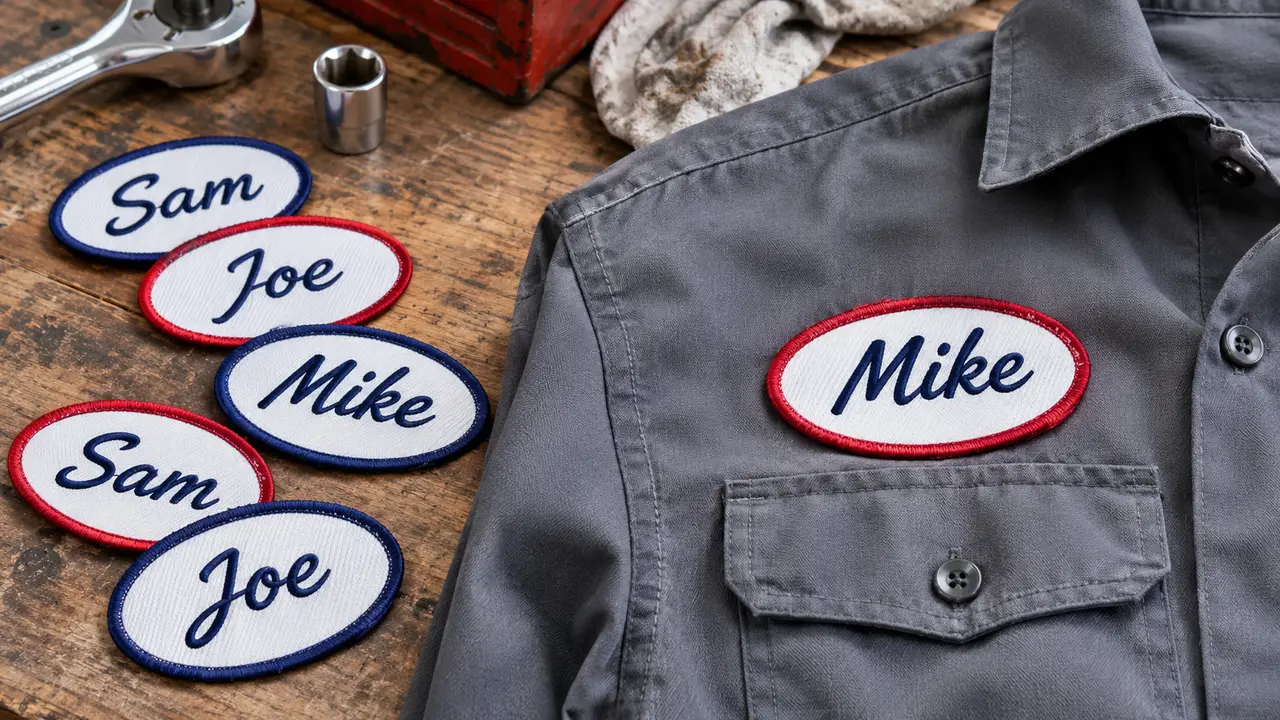
- Patches: combine several patches; see how to make embroidered patches and iron-on vs sew-on patches.
Denim vs Other Jacket Fabrics
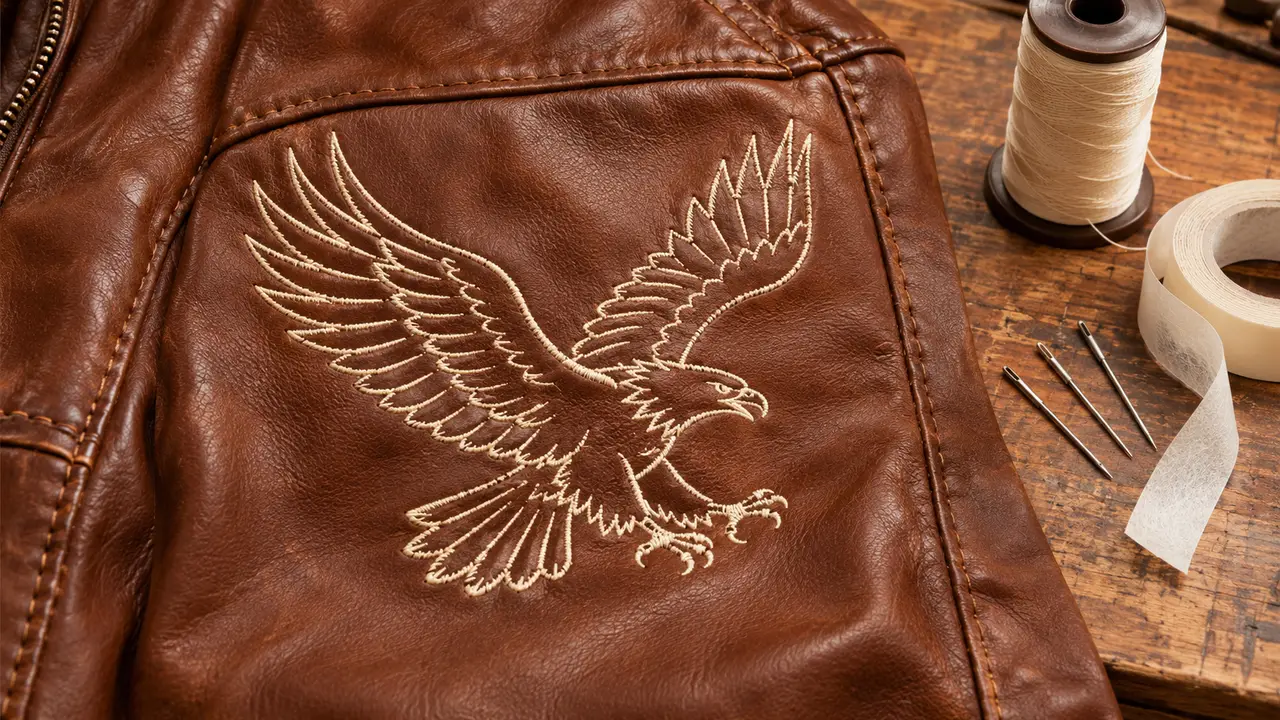
Denim is easier than leather, nylon or puffer jackets, which show permanent holes or cannot be hooped flat. For those, see embroidery on leather or use patches. For hooded styles, see the hoodie embroidery guide.
Planning a custom denim jacket? Send your artwork with the jacket size and back panel measurements, or see digitizing prices. For raised lettering, ask about 3D puff and applique.
Written by the Velora Digitizing Team
Digitizing StudioThis guide is written and reviewed by the digitizers at Velora Digitizing, who prepare embroidery files for caps, jackets, patches, and left chest logos every day. The advice here comes from the same stitch-path, underlay, and fabric choices we make on client orders.
Related service
Jacket Back Digitizing