Embroidery on Leather: Can You Embroider Leather and How to Do It Right
Leather can be embroidered beautifully, but every needle hole is permanent. Here is how to choose designs, needles, backing and settings for clean leather embroidery.
Embroidery Digitizing Studio
Commercial Digitizing Service
Need production-ready machine files? Explore our Custom Embroidery Digitizing
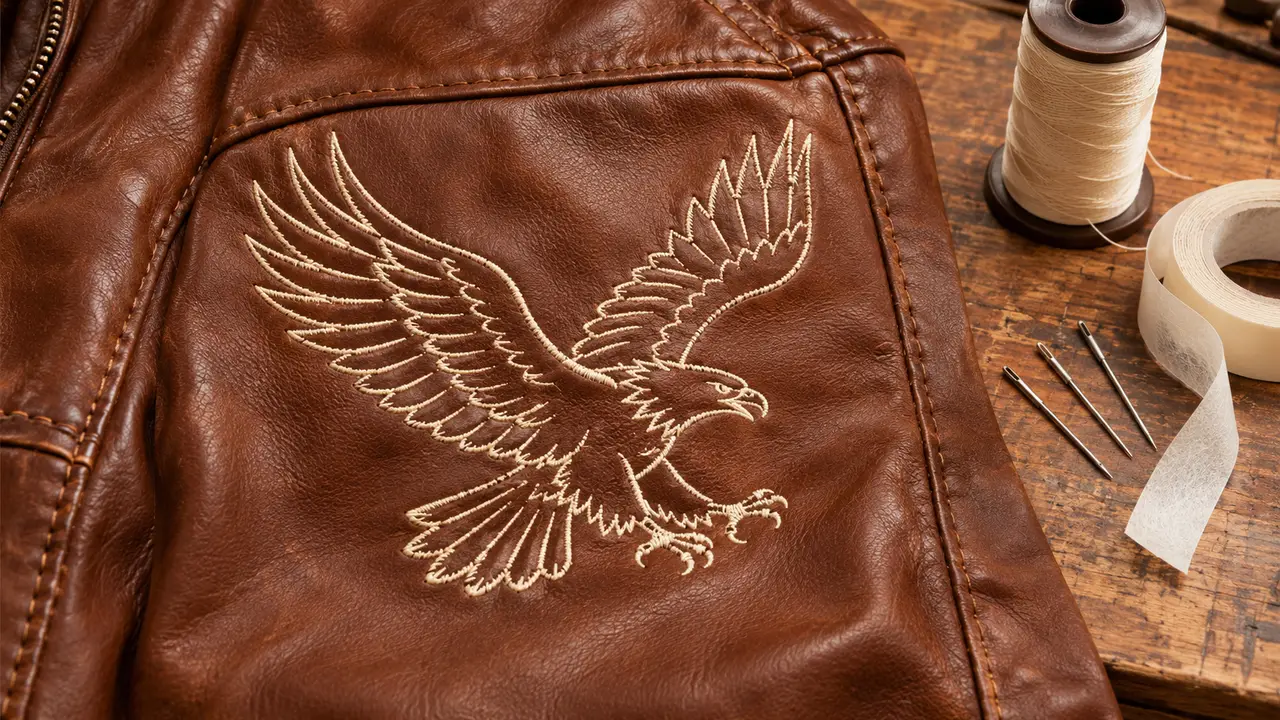
Embroidery on leather works well when the design is made for it. Leather does not heal like fabric, so every needle hole is permanent. Use a lighter, more open design with fewer stitches, a sharp or leather needle, a firm stabilizer and a gentle hooping method. Done right, embroidered leather jackets, bags and patches look premium and last for years.
This guide covers which leathers to use, needles, stabilizer, hooping and the digitizing changes leather needs. If you have a logo for leather, our embroidery digitizing team can build a leather-friendly file with adjusted density.
Can You Embroider on Leather? What Works Best
| Leather | How it embroiders | Use for |
|---|---|---|
| Thin, soft leather and lambskin | The easiest; takes light designs well | Jackets, bags, accessories |
| Faux leather and vinyl | Embroiders well; holes are just as permanent | Bags, patches, fashion items |
| Suede | Works, but the nap hides fine detail | Bold designs only |
| Thick or stiff hides | Hard to hoop and to stitch densely | Patches or laser engraving instead |
- Thin, soft leather and lambskin: easiest to embroider; good for jackets and accessories.
- Faux leather and vinyl: embroiders well but holes are just as permanent.
- Suede: works, but the nap can hide fine detail; keep designs bold.
- Thick or stiff hides: harder; better suited to patches or engraving.
- Finished leather goods: wallets and bags with lining need careful planning to reach the back.
Needles, Thread and Stabilizer
- Needle: sharp 75/11 to 80/12 for soft leather, leather or wedge point for thicker hides.
- Thread: 40 weight polyester is the standard; see the thread weight guide.
- Stabilizer: a medium cutaway or firm tearaway behind the leather keeps it flat. See the stabilizer guide.
- Speed: run slower than usual to reduce heat and thread breaks.
| Setting | Normal woven fabric | Leather |
|---|---|---|
| Needle | 75/11 sharp | Sharp 75/11 to 80/12 for soft leather; leather or wedge point for thick hides |
| Design density | Standard | More open, so the holes do not perforate the leather |
| Underlay | Edge run, zigzag or tatami | Minimal |
| Stitch types | Satin, fill and running | Mostly satin and running; avoid large fills |
| Hooping | Hoop the fabric | Hoop the stabilizer only and attach the leather on top |
| Machine speed | Normal | Slower |
How to Hoop Leather Without Marks
- 1Hoop only the stabilizer, tight and smooth.
- 2Attach the leather on top with light temporary adhesive or embroidery tape outside the design area.
- 3Or use a magnetic hoop with a layer of felt or foam to protect the surface.
- 4Run a basting box around the design to hold the leather in place.
- 5Test on a scrap piece of the same leather before stitching the real item.
Digitizing Designs for Leather
- Lower density: open fills and wider spacing so holes do not perforate the leather.
- Light underlay: minimal underlay; heavy underlay adds extra holes.
- Prefer satin and running stitches: satin columns and outlines look clean; large fill areas should be avoided or kept open.
- Avoid layered colors: stacked objects double the needle holes.
- Minimal pull compensation: leather does not shrink in like knits.
- Bold lettering: see best fonts for embroidery.
Machine Embroidery on Leather Jackets
Leather jacket backs are popular, but large dense designs stress the hide. Use applique to cover big areas with fabric instead of stitches; see applique digitizing. For panels that are hard to hoop, an embroidered patch sewn on later is safer. Related guides: jacket back digitizing and denim jacket embroidery.
Removing Embroidery From Leather
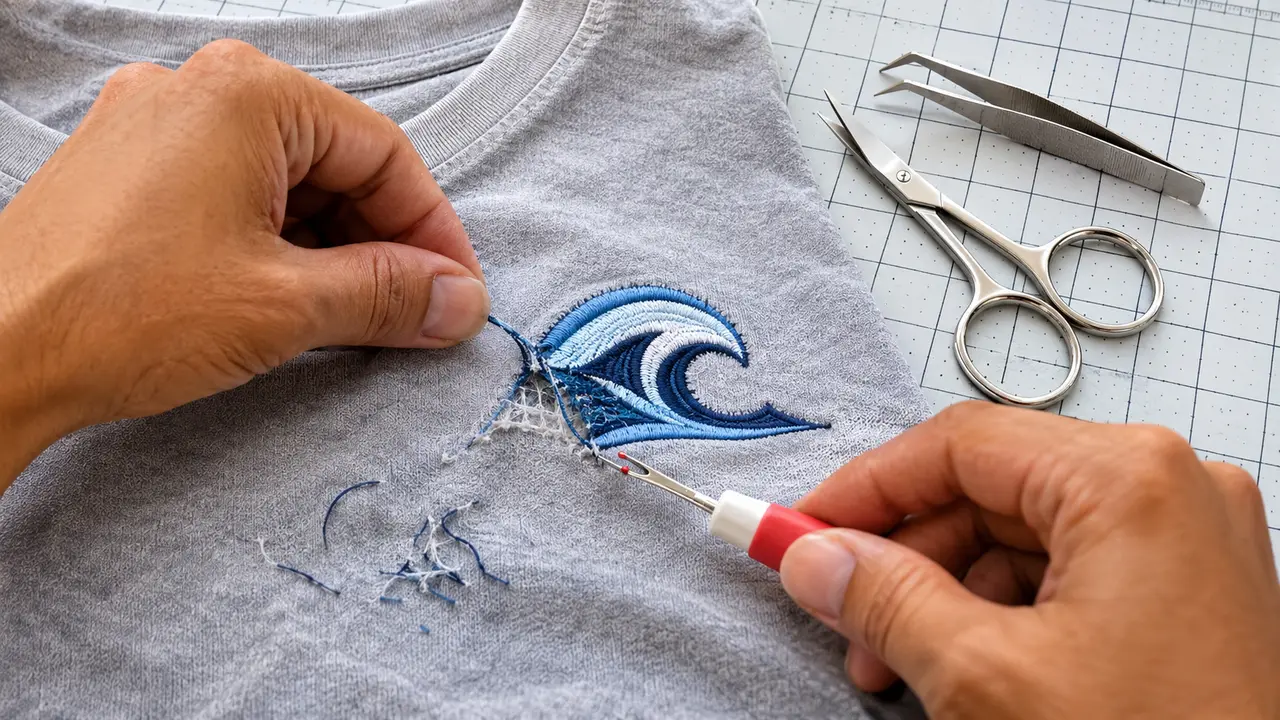
Removing stitches from leather leaves the holes behind, so plan the design carefully before you stitch. If a logo must change, cover it with a new design or patch. See how to remove embroidery from a shirt or jacket.
Need a leather-friendly file? Send your logo, the leather type and finished size through our contact page, or check digitizing prices. For hats, compare cap logo digitizing with leather patches.
Written by the Velora Digitizing Team
Digitizing StudioThis guide is written and reviewed by the digitizers at Velora Digitizing, who prepare embroidery files for caps, jackets, patches, and left chest logos every day. The advice here comes from the same stitch-path, underlay, and fabric choices we make on client orders.
Related service
Custom Embroidery Digitizing